Users despise loading spinners, and network latency is a hard physics problem you cannot simply code away. If your application relies on a constant server connection to render basic UI states, you are delivering a degraded user experience. For nearly two decades, the software industry operated under the thin client model. Browsers and mobile apps acted as transient views of state managed exclusively by a remote server database.
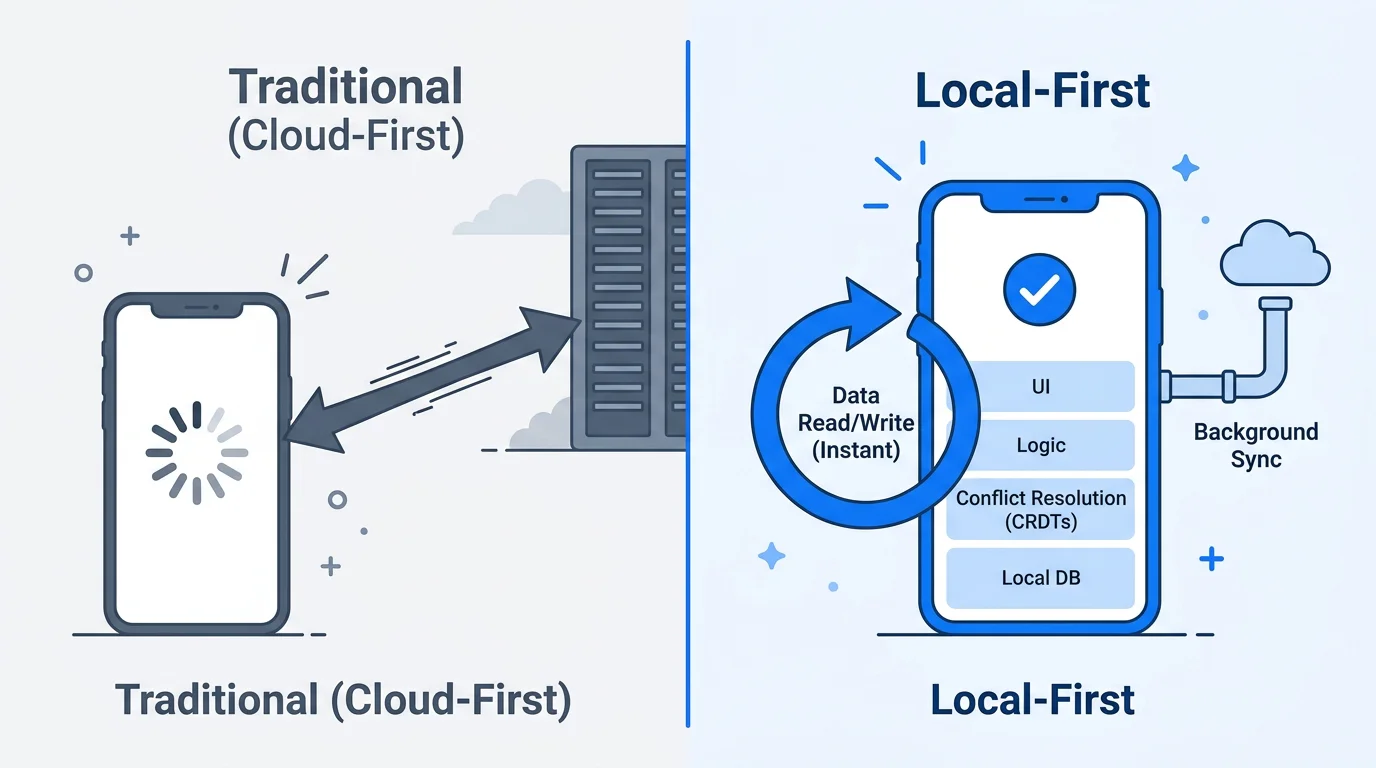
By 2026, the maturity of local storage APIs and the absolute demand for low-latency interfaces have solidified a new baseline. We call this the Offline-First Flutter Architecture, though the principles apply across all modern thick-client development. In this model, the primary, authoritative copy of application data resides directly on the user's device. The cloud is stripped of its title as the single source of truth, relegated instead to the role of a durable relay and backup peer.
The core promise of local-first is straightforward. Software must work offline by default, respond instantly, and guarantee user agency over personal data. Achieving this requires development teams to completely reimagine the data stack. We must abandon traditional REST and GraphQL fetch-and-wait methodologies and replace them with distributed systems primitives.
Building these distributed primitives from the ground up is notoriously difficult. Engineering a reliable local-first syncing mechanism often becomes a massive time-sink that derails project timelines. Managing background synchronization logic, maintaining offline databases, and handling edge-case conflict resolution drains engineering resources. This reality is exactly why smart agencies use feature-first templates and SaaS-in-a-Box bundles from Stacklyn Labs to bypass backend infrastructure headaches and ship production-ready applications months faster.
The database choice underneath all of this matters just as much on the web as it does on mobile. We cover the same tradeoff from the Flutter side in choosing a Flutter local database in 2026.
The Storage Foundation: OPFS, SQLite Wasm, and Local Databases
The architectural shift begins at the local storage layer. For years, web and hybrid developers were forced into using IndexedDB, a low-level key-value store plagued by performance bottlenecks. Native mobile developers wrestled with cumbersome ORMs that blocked the main thread. Today, the standard for high-performance local storage requires bringing ACID-compliant, relational power directly to the edge.
On the web, this means compiling SQLite to WebAssembly (Wasm) and leveraging the Origin Private File System (OPFS). OPFS provides a highly sandboxed, virtualized file system within the browser that executes near-native disk I/O. By running SQLite directly on top of OPFS, web applications gain a database capable of handling complex relational queries and gigabytes of data locally.
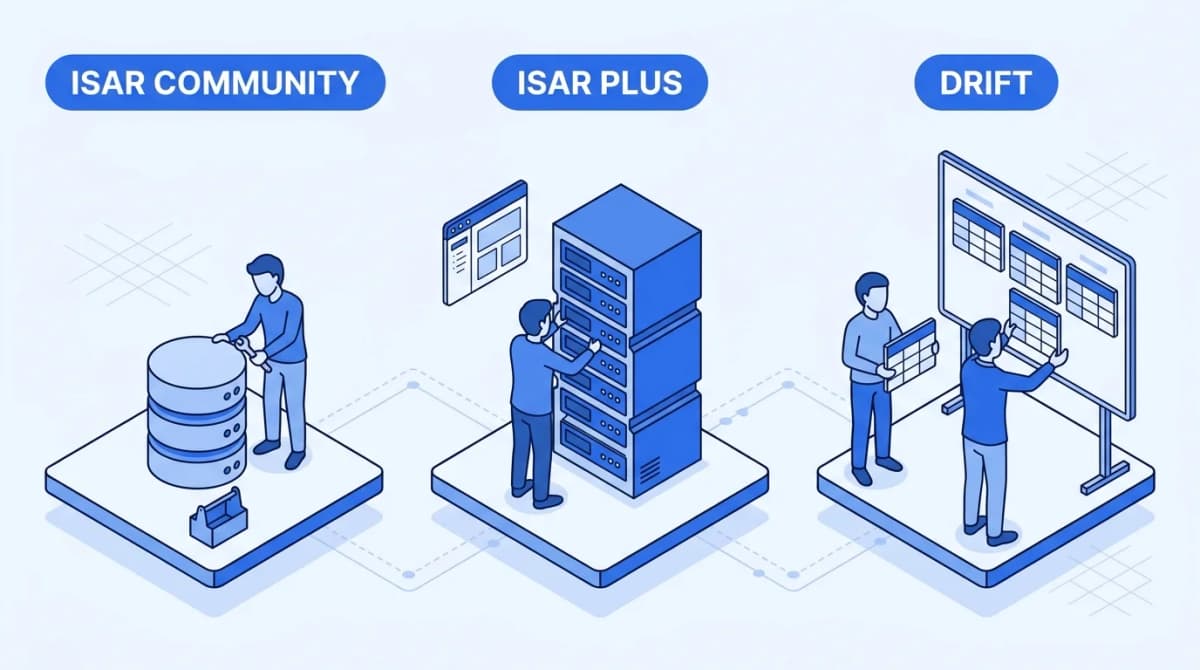
In the mobile ecosystem, particularly within an Offline-First Flutter Architecture, developers achieve this same instantaneous read/write capability using fast local databases like Isar or compiled SQLite implementations. Application logic interacts with data as if it were an embedded library. Your UI components simply watch local data streams, rendering updates instantly and completely eliminating the network loading spinner common in legacy single-page applications.
Synchronization and Conflict Resolution: The Magic of CRDTs
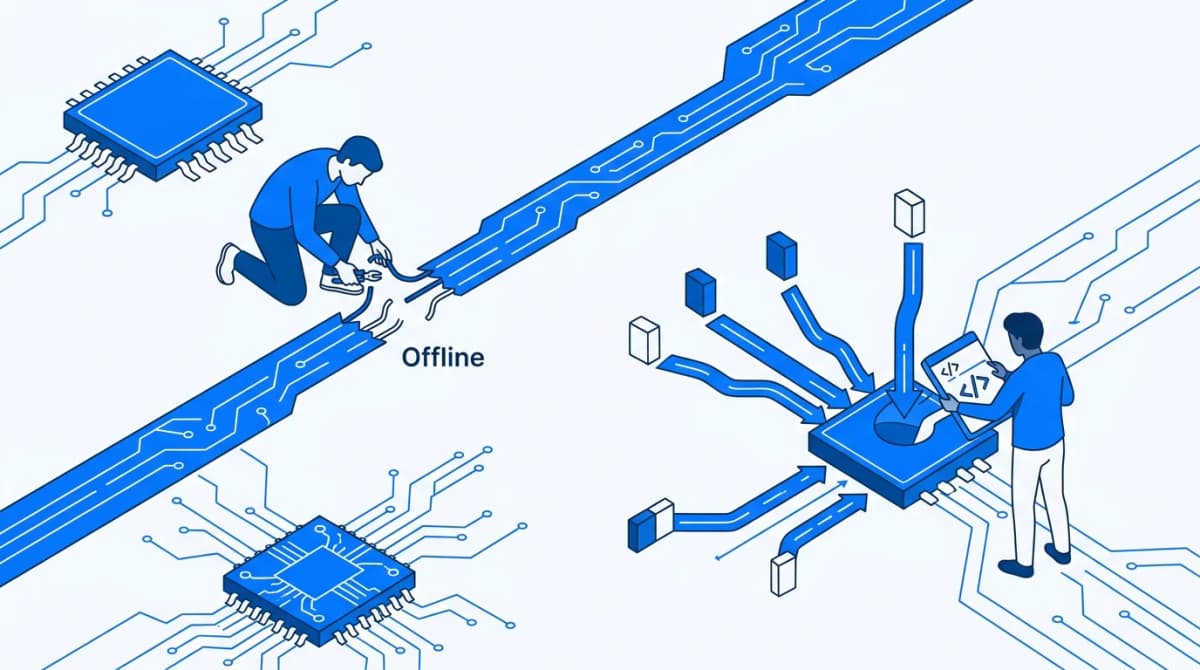
The most severe engineering hurdle in local-first development is the reconciliation of concurrent edits. Picture a scenario where two users modify the exact same database record while riding in an airplane without Wi-Fi. When connectivity is restored, the system must merge those conflicting changes algorithmically without dropping data or crashing the app.
Conflict-free Replicated Data Types (CRDTs) have become the definitive industry standard for solving this exact distributed systems problem. Older systems relied on Operational Transformation (OT), which forced all edits through a central server to mediate the correct order of operations. CRDTs eliminate the middleman. They are mathematically structured to be commutative, associative, and idempotent.
This mathematical guarantee means that as long as all peers eventually receive the same set of data operations, they will converge on the exact same state. The order in which those packets arrive over the network no longer matters. Architecturally, we categorize these structures into two primary implementations:
- State-based CRDTs: These protocols transmit the entire data structure, or a heavy delta of it, during synchronization events. They are simpler to implement natively but can quickly become bandwidth-intensive for large datasets.
- Operation-based CRDTs: These transmit only the highly specific atomic operations, such as "insert character X at index 5." This approach is highly efficient for collaborative environments requiring high-frequency, real-time syncing.
Writing a custom CRDT engine is a highly specialized task that introduces immense technical debt. Libraries like Automerge and Yjs provide production-grade frameworks that abstract this complexity, binding CRDT-managed states directly to UI layers. For teams looking to accelerate development, leveraging pre-built offline-first architectures ensures these complex CRDTs in Flutter are handled out of the box, saving months of trial and error.
The Connectivity Layer: The Cloud as a Reliable Peer
In a fully realized local-first architecture, the server stops being the master dictator of state. It becomes a reliable, always-on peer in a wider network. This paradigm shift forces architects to completely rethink backend infrastructure. The backend no longer serves JSON to power screens; instead, it provides utility services to the distributed edge.
The primary responsibilities of this modern backend include:
- Durability: Acting as a persistent, secure backup for user data in case a device is lost or destroyed.
- Discovery: Assisting client devices in finding one another to facilitate direct Peer-to-Peer (P2P) synchronization via WebRTC.
- Authorization: Validating cryptographic proofs to ensure a specific user has the legal right to push a mutation to a shared dataset.
Modern application stacks rely on dedicated Sync Engines, such as ElectricSQL or Replicache, to handle this connectivity layer. These engines sit invisibly between your local SQLite or Isar database and your remote cloud database. They manage the brutal logic of capturing local database changes, streaming them asynchronously to the server, and concurrently pulling down merged updates from other collaborative users.
The Challenge of Partial Sync: Sync Shapes
One of the most persistent hurdles in modern thick-client engineering is the Partial Sync problem. In legacy cloud-first applications, the client only executes a GET request for the exact data required to paint the current screen. In a local-first application, the optimal state is having the entire database available offline.
However, as enterprise datasets grow into the tens of gigabytes, downloading an entire production database to a mid-range smartphone becomes physically untenable. The architectural answer to this problem is the implementation of Sync Shapes, also known as Dynamic Subsets. These rulesets allow developers to define strict, contextual boundaries for what data actually syncs to the physical device.
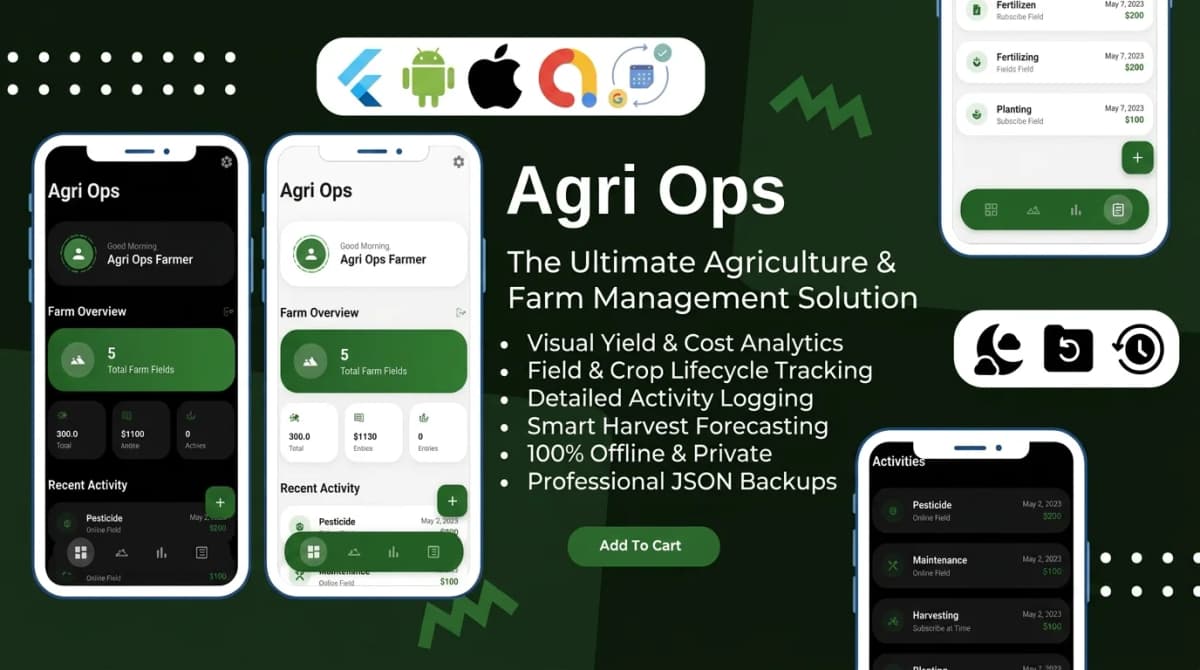
For example, an offline-first agricultural tracking app might only sync crop data relevant to the specific farm the user is currently standing in. A client membership manager might only cache active members, ignoring ten years of archived records. Defining these boundaries requires meticulous schema planning to ensure you do not accidentally break the relational integrity of the local database by leaving a required foreign key on the server.
Building out robust partial sync logic is notoriously tricky and error-prone. This is another area where utilizing pre-configured SaaS-in-a-Box bundles provides immediate ROI. Teams can rely on proven background synchronization logic rather than spending weeks debugging missing relational data on physical devices. If that engineering time is already committed to the sync layer, it's worth not burning more of it on the marketing site: NeonMind gives an AI SaaS product a production-ready landing page out of the box, so your team's hours stay on the architecture that actually differentiates you.
Schema Migrations in a Distributed World
Schema evolution is widely considered the final boss of local-first architecture. In a centralized REST system, migrating a database is relatively trivial: you lock the server, run a SQL migration script, update the API, and the job is done. In a distributed, local-first ecosystem, you might have thousands of users running five different versions of your mobile app, each operating their own local database.
You cannot force an offline user to run a migration script. Solving this requires strict Backward-Compatible Schema Evolution. Developers must design local database schemas that can gracefully handle unknown fields originating from newer versions of the software. The migration logic must exist entirely within the client-side application code itself, running automatically the moment the app updates.
Advanced architectures are increasingly utilizing "Lenses" to manage this chaos. Lenses are bidirectional data transformations that map records between divergent schema versions on the fly. They bridge the gap between an outdated client state and the current network state, ensuring that old apps do not corrupt the shared data pool.
Security and Authorization at the Edge
Security in distributed, local-first systems fundamentally moves away from traditional session-based middleware. Because the server does not immediately intercept and validate every single user action, authorization must be baked directly into the data payload itself. You cannot rely on a REST middleware layer to reject a bad request if the request happened offline three hours ago.
To secure these systems, architects utilize Public Key Infrastructure (PKI) and cryptographic proofs. Every change made by a user on their local device is cryptographically signed using a private key stored in the device's secure enclave. When the device eventually reconnects and broadcasts its changes, other peers and the cloud server verify the signature. This guarantees the modification was explicitly authorized by a user holding the correct dataset permissions.
Engineering for Resilience
The architecture of local-first software represents a definitive return to thick client engineering, heavily empowered by a decade of intense research into distributed systems. Yes, it introduces significant technical complexity regarding state synchronization, partial syncing, and offline schema management. However, the resulting user experience instantaneous, private, and entirely resilient to network failures is the mandatory new benchmark for premium software. Stop pretending the network is reliable, and start engineering as if the network is merely an optional optimization.
References & Further Reading
- Kleppmann, M., et al. (2019). Local-first software: You own your data, in spite of the cloud.
- SQLite Project & Google Chrome Developer Blog. SQLite Wasm: The Database for the Modern Web.
- Automerge and Yjs Documentation. The Case for CRDTs in Local-First Applications.
- ElectricSQL Documentation. ElectricSQL: Local-first for Postgres and Sync Layer Architecture.

Written by Stacklyn Labs
Stacklyn Labs is a small studio publishing offline-first Flutter templates on CodeCanyon and Codester since 2025, and building custom Flutter and web apps for the teams who buy them.