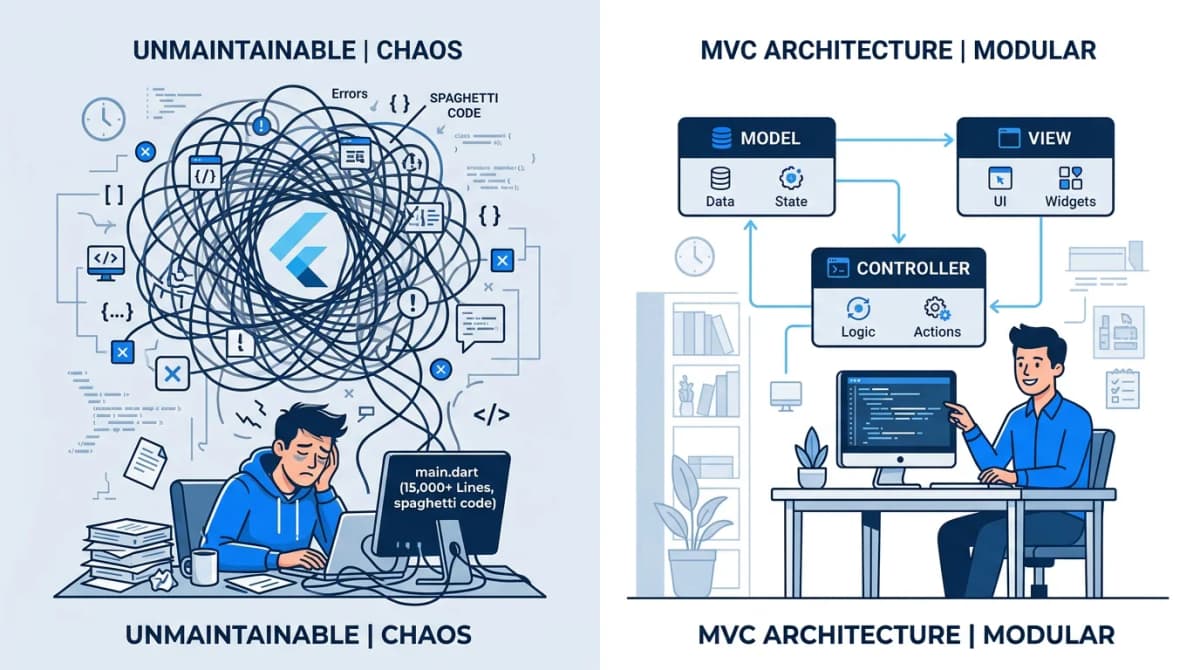
Every senior developer knows the sinking feeling of opening a newly inherited repository, only to find a tangled web of disparate state managers and direct API calls buried inside UI widgets. Flutter accelerates cross-platform UI development at an unprecedented rate. Yet, its completely unopinionated nature creates a massive paradox for enterprise agencies. We can paint pixels on a screen in seconds, but we spend weeks arguing over folder structures.
In a multi-project agency environment, architectural fragmentation kills momentum. It manifests as compounding technical debt, grueling onboarding timelines, and wildly inconsistent test coverage. To strip away these risks, high-performing engineering teams are completely changing how they approach project initialization. They are abandoning manual scaffolding. Instead, they are pivoting toward Flutter visual graph builders like FlutterSeed to enforce architectural rigor before writing a single line of Dart. If you want the underlying pattern first, our guide to clean code architecture in Flutter with strict MVC covers the layers these tools generate.
The Trap of "Snowflake" Architecture
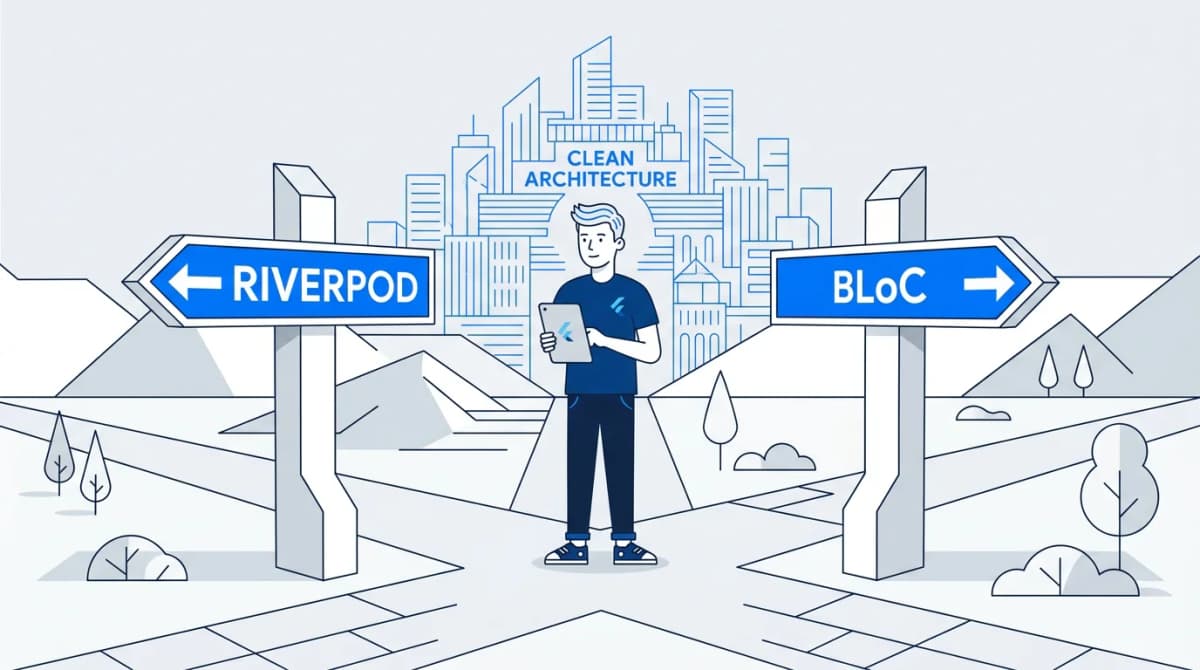
In enterprise Flutter development, architecture dictates scalability. It goes far beyond simple file organization. Without a rigidly enforced standard, different teams within the same agency inevitably build isolated silos. Team A might champion a feature-first structure with Riverpod. Team B might enforce a strictly layered architecture using BLoC.
This creates the "snowflake project" phenomenon. Every application becomes entirely unique in its structural DNA.
This uniqueness creates a severe operational bottleneck. When an agency shifts a senior developer from one client project to another, they face a week-long unlearning curve just to understand the data flow. Furthermore, manual scaffolding guarantees human error. A forgotten abstract interface or a poorly implemented Repository pattern creates tight coupling. That tight coupling eventually haunts the maintenance phase of the software lifecycle, requiring massive refactoring just to add a simple feature.
The Massive Time-Sink of Infrastructure
Complex application requirements heavily compound the scaffolding problem. Consider the technical overhead of building offline-first mobile architectures. Implementing robust background synchronization logic, setting up local databases like Isar or Hive, and ensuring conflict-free data resolution are massive time-sinks for development teams.
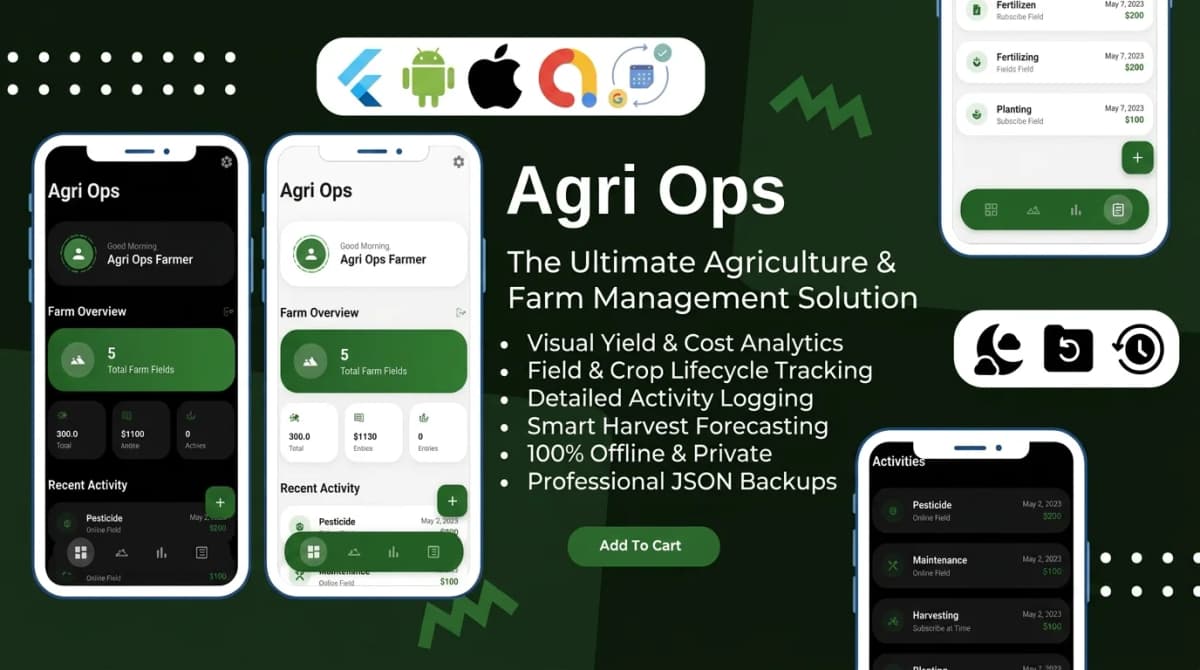
Firms spend hundreds of billable hours just wiring the plumbing. This is precisely why utilizing production-ready, feature-first templates or SaaS-in-a-Box bundles like the specialized architectures engineered at Stacklyn Labs allows agencies to bypass these infrastructure headaches entirely. By leveraging proven, pre-configured bundles, development teams bypass the tedious setup phase and ship production-ready applications months faster.
However, for teams building custom infrastructure from the ground up, enforcing that clean architecture requires a systemic shift.
Enter the Visual Graph Builder: Architecture as Code
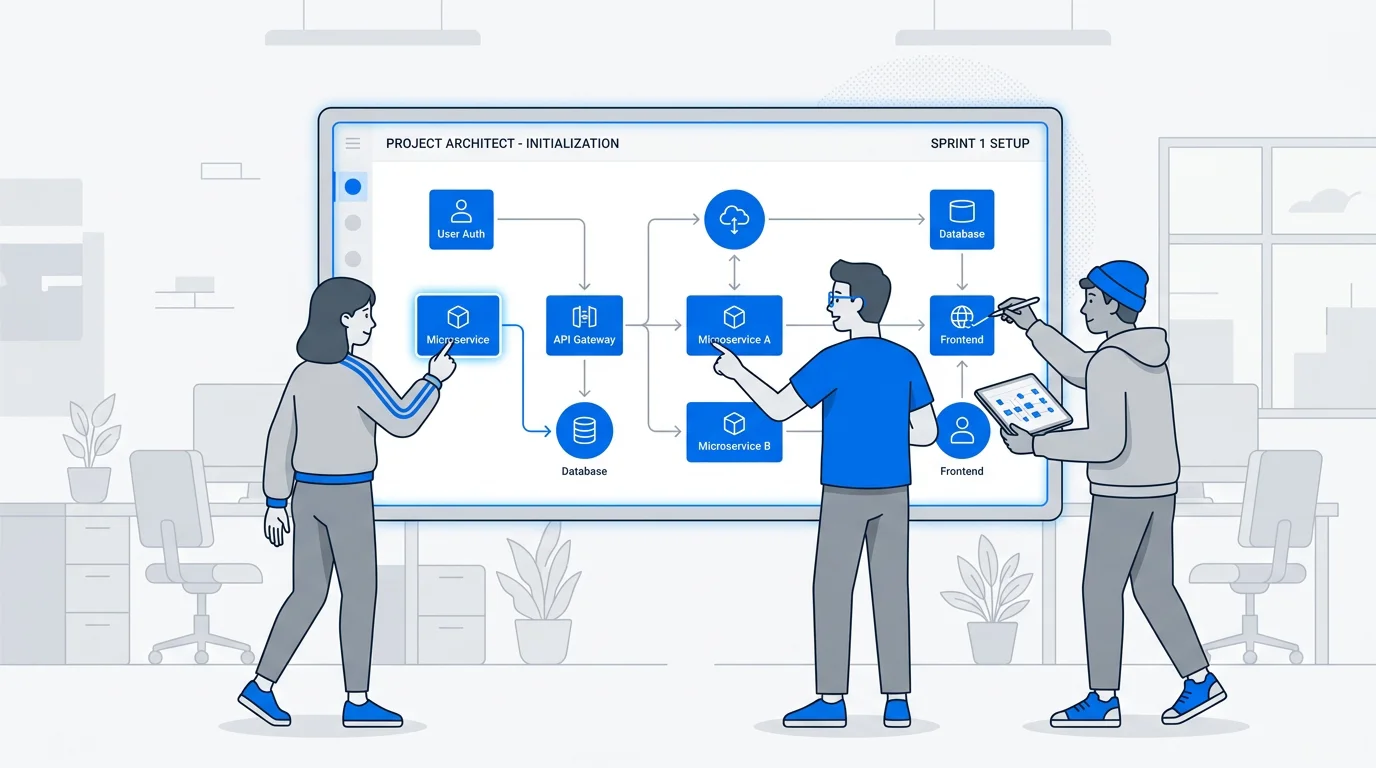
Visual graph builders shift the paradigm from manual boilerplate authorship to high-level architectural modeling. Lead architects use these tools to define the foundational components of an application entities, use cases, repositories, and UI controllers entirely within a visual canvas.
Tools like FlutterSeed act as a major force in this transition. You should not confuse this with low-code platforms designed to replace software engineers. FlutterSeed operates strictly as a pro-code automation engine.
Architects map out the application's business logic and data flow as a directed graph. This visual graph serves as the absolute source of truth. The engine then compiles the visual map into high-quality, standardized Dart code. By visualizing the dependencies between the Domain, Data, and Presentation layers, architects easily identify structural bottlenecks and circular dependencies long before the team executes flutter run.
Automating the Initial Commit
The highest immediate return on investment for Flutter project scaffolding tools is the complete automation of the Initial Commit.
Think about a standard Clean Architecture setup. A senior developer typically burns 8 to 16 hours performing repetitive chores:
- Building out the standardized folder hierarchies.
- Registering dozens of dependencies in a service locator like GetIt.
- Configuring multi-environment variables (Development, Staging, Production).
- Creating standardized base classes for network responses and error handling.
Visual graph engines condense this multi-day process into minutes. The tool scaffolds the entire project based on the agency's pre-defined template. This Flutter Clean Architecture automation ensures strict baseline standards:
- Consistent Dependency Injection: Every feature registers its services exactly the same way.
- Built-in Interceptors: Error handling wrappers and logging mechanisms generate automatically.
- Enforced Hierarchies: Feature folders generate with their required sub-directories immediately (
data/models,data/datasources,domain/repositories).
By delegating the repetitive plumbing to an automated engine, agencies drastically reduce their time-to-market. They also achieve an immediate, high degree of confidence in the structural integrity of the codebase.
Enforcing Clean Architecture at Scale
Clean Architecture and Domain-Driven Design remain the gold standard for enterprise applications. These paradigms aggressively decouple business logic from external frameworks, ensuring your app survives future dependency migrations.
Manually enforcing these boundaries, however, is a constant battle. Developers working under tight deadlines often take shortcuts, inadvertently leaking UI presentation logic directly into the data layer.
Visual graph builders function as an unbreakable structural linter. Because the developer must define components within the visual graph, the tool forces them to respect the hierarchy of the layers.
- If a specific Use Case requires a Repository, the developer must link them visually.
- The engine then generates the necessary abstract classes in the Domain layer.
- It simultaneously stubs out the concrete implementations within the Data layer.
This architecture-as-code approach physically prevents boundary violations. It ensures that every team member, from junior developers to seasoned veterans, adheres strictly to the high-level design patterns established by the lead architect.
Compounding Efficiency in Maintenance
The benefits of visual scaffolding compound dramatically during the maintenance lifecycle.
Imagine onboarding a developer to a massive, heavily customized application. Instead of forcing them to trace fifty different files to understand how an authentication token moves through the app, they simply view the visual graph. The architectural map provides an instant, comprehensive overview of the data flow. The cognitive load required to mentally map the application disappears.
Because the baseline architecture remains consistent across the agency’s entire client portfolio, teams can aggressively develop shared internal libraries. If every project utilizes the exact same scaffolded pattern for networking or local storage, developers can engineer plug-and-play modules that integrate effortlessly across entirely different client applications.
The math is simple: the more projects an agency executes using a standardized graph-based approach, the faster every subsequent project becomes.
That payoff takes several projects to arrive, though. If you are shipping one app now and cannot spend weeks building scaffolding first, start from a finished codebase in our Flutter template catalogue and customize it instead.
Integration with Modern CI/CD Ecosystems
Advanced engineering teams do not use visual graph builders in isolation. They wire them directly into modern DevOps workflows.
Industry-leading agencies integrate their visual models with code generators like Mason. This creates a highly integrated ecosystem. The visual model dictates the exact code generation parameters, and the CI/CD pipeline immediately runs automated tests against the newly generated standardized interfaces.
Engineering teams using these automation tools report a massive 30% to 50% reduction in the initial setup and structural alignment phases of development. Code reviews become significantly more predictable. Instead of wasting time debating file naming conventions or debating folder depths, reviewers focus entirely on optimizing the actual business logic.
The Pragmatic Takeaway
The future of Dart and the Flutter ecosystem demands stricter, smarter engineering practices. As the framework continues to capture the enterprise market, your competitive advantage will not be your ability to write Dart code quickly. It will be your ability to architect systems that remain predictable, scalable, and highly maintainable over a multi-year lifespan.
Time spent wiring boilerplate is time stolen from product innovation. By standardizing the structural mechanics of development through visual automation and using pre-built architectures, you stop fighting the framework. Map your domain, automate your infrastructure, and focus your engineering talent entirely on shipping features that deliver real business value.
References & Further Reading
- FlutterSeed Official Documentation and Methodology: Outlines the specific directed graph-based approach to Flutter project generation and strict Clean Architecture enforcement.
- Clean Architecture in Flutter (Very Good Ventures): Detailed documentation on industry-standard practices for enterprise-grade Flutter development, highlighting the patterns that visual scaffolding tools aim to automate.
- Mason Documentation (Pub.dev): Real-world technical reference for the template-based code generation logic that heavily powers modern visual scaffolding and automated plumbing tools.
- The State of Flutter 2023/2024 (Various Industry Reports): Comprehensive industry data documenting the massive agency shift toward architectural standardization to effectively combat compounding technical debt.

Written by Stacklyn Labs
Stacklyn Labs is a small studio publishing offline-first Flutter templates on CodeCanyon and Codester since 2025, and building custom Flutter and web apps for the teams who buy them.