Building a full-stack Flutter app means writing your backend in Dart, but managing dozens of complex database relations through raw YAML files is a massive developer bottleneck. You need more than a simple command-line interface to scale a production-grade backend without introducing crippling architectural debt.
For years, Flutter developers relied on external backend languages like Node.js, Go, or Python. This forced engineering teams to duplicate business logic, maintain entirely separate data models, and manage complex CI/CD pipelines across different codebases. Serverpod fundamentally changed this paradigm. By providing a framework engineered specifically for the Dart ecosystem, it allowed developers to share code natively between the client and the server. You write your domain models once, and the framework generates the boilerplate.
However, migrating to a Full-Stack Dart Architecture exposes a harsh reality regarding tooling. The framework relies heavily on code generation driven by configuration files. As enterprise applications scale, managing backend logic through flat text files becomes a severe liability.
We see this constant struggle at Stacklyn Labs. Building mobile infrastructure especially when handling complex requirements like offline-first local syncing, Conflict-Free Replicated Data Types (CRDTs), or secure background isolates is an enormous time-sink. Agencies and development teams utilize our production-ready Flutter templates and SaaS-in-a-Box bundles specifically to bypass these infrastructure headaches. They buy out-of-the-box architectures to ship months faster.
Even the storage question on the device side deserves its own decision; our guide to Flutter local database options in 2026 compares which packages are still maintained before you commit to one.
But if your team is actively committed to maintaining custom Serverpod microservices from scratch, you cannot afford to waste hours tracking down missing foreign keys. You need specialized Serverpod developer tools to maintain engineering velocity.
The Configuration Trap in Code Generation
Serverpod’s architecture demands that developers define their data models and database tables inside the lib/src/protocol directory. You create a YAML file for every database entity.
A simple user model looks manageable:
YAML
class: AppUser
table: app_users
fields:
  email: String
  createdAt: DateTime
The server generator reads this file, writes the Dart class, creates the PostgreSQL database migrations, and updates the client-side library automatically.
The problem triggers when you introduce deep relational complexity. Imagine an enterprise application with sixty interconnected tables mapping out multi-tenant permissions, nested inventory tracking, and complex audit logs. You are suddenly managing thousands of lines of configuration across dozens of isolated files.
Senior architects understand that human error scales linearly with complexity. A developer will inevitably mistype a foreign key reference. A missing index will slip through code review, silently degrading database query performance. Trying to mentally map how a specific uuid cascades through three different domain models just by reading flat YAML files drains your engineering resources. The system becomes dangerously opaque.
Automated Schema Visualization: Engineering the Source of Truth
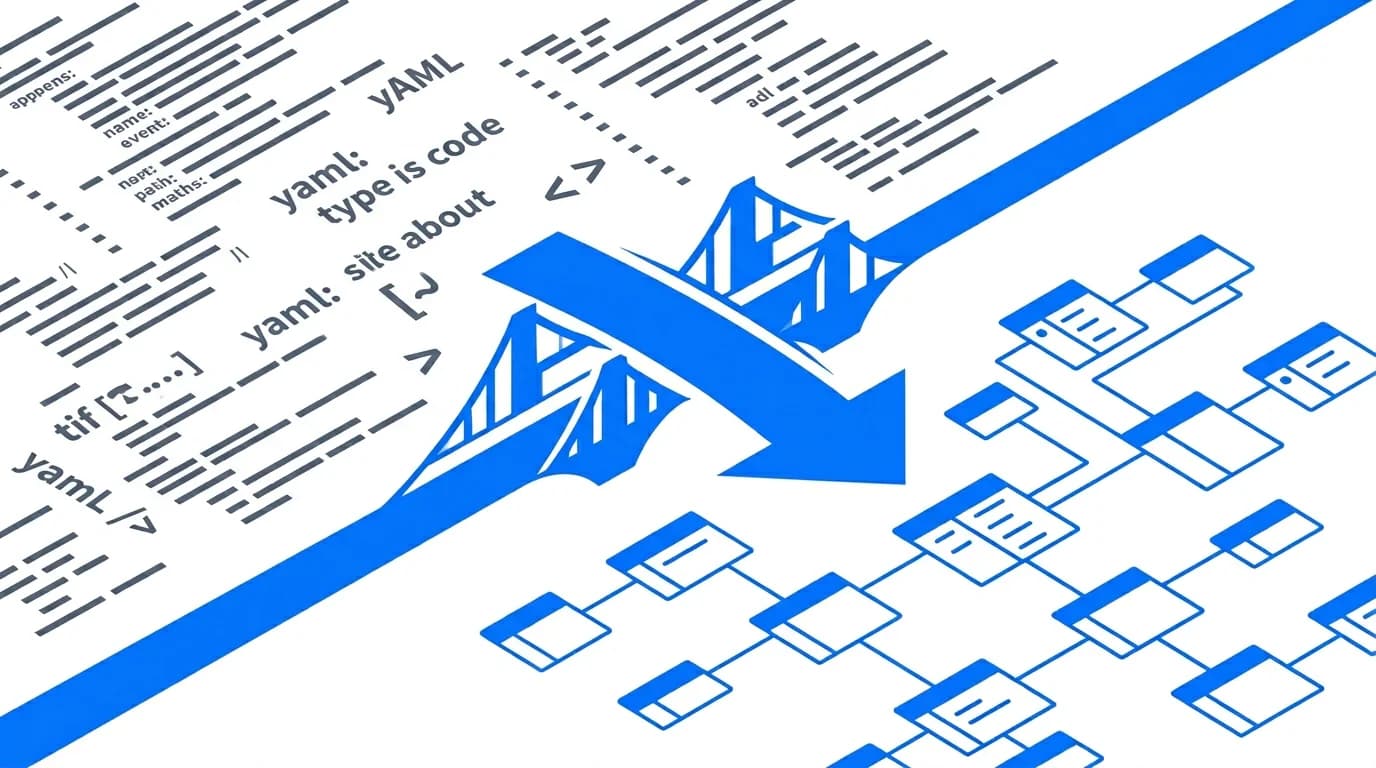
Dartform was engineered specifically to attack this opacity. It acts as a dedicated graphical interface for Flutter backend development, translating raw configuration files into actionable insights.
The centerpiece of the platform is its dynamic Entity-Relationship (ER) diagram generator. It does not require manual canvas drawing. It reads your project structure and mathematically maps the architecture.
Real-Time Protocol Parsing
Dartform hooks directly into your project's directory structure. It monitors the protocol files in real-time. By parsing the exact syntax Serverpod expects, it renders visual nodes representing every table, field, and relationship type.
This visual layer is not a static documentation export. It is a live dependency graph. For technical leads, this visualization yields immediate dividends:
- Strict Structural Validation: You visually confirm that your one-to-many and many-to-many relationships map correctly. Missing indexes or orphaned tables stand out immediately, allowing you to fix database constraints before generating migration files.
- Refactoring Safety: Modifying core entities in a relational database always carries risk. Dartform creates a visual feedback loop. You see the exact blast radius of a proposed schema change. You understand exactly which downstream tables rely on a specific primary key before you execute destructive commands.
- Accelerated Onboarding: Onboarding backend developers to a massive codebase is notoriously slow. Instead of forcing new hires to reverse-engineer flat YAML files, you hand them an interactive ER diagram. They grasp the core data flow instantly and start contributing.
By automating the visualization of the data layer, teams lock down their architecture. They eliminate "architectural drift," ensuring that the codebase matches the strict mental model of the lead engineers.
Bridging the Custom Protocol Testing Gap
Database visualization solves the structural problem, but endpoint testing remains a severe friction point in custom backend architectures.
When you build standard REST APIs, tools like Postman or Insomnia work perfectly. You hit a URL, send a JSON payload, and read the JSON response. Serverpod operates differently. To maximize performance and maintain strict type safety, Serverpod utilizes a custom serialization protocol optimized entirely for Dart.
This performance boost actively degrades the third-party testing experience. Standard API clients do not understand Dart-specific data structures natively. If you want to test an endpoint that expects a deeply nested Dart object containing custom DateTime formatting or a ByteData stream, you have to manually construct a massive, brittle JSON payload in Postman.
You spend more time debugging your testing tool than debugging your actual API endpoint.
Introspection and Type-Safe Execution
Dartform eliminates this context-switching penalty by operating as a "Serverpod-aware" testing environment. Because it understands the exact generation logic of the framework, it integrates directly with your compiled client library.
The application utilizes code introspection to automatically list every single exposed endpoint and its required parameters within the GUI.
The technical advantages are substantial:
- Zero Configuration Routing: You never manually update API paths, ports, or authentication headers. Dartform continuously syncs with the active state of your local server instance.
- Guaranteed Type-Safe Payloads: The user interface explicitly respects the static types defined in your Dart code. Instead of writing raw JSON, you use UI input fields dynamically generated for specific Dart primitives. This ensures your payload perfectly matches the server’s serialization expectations, preventing false-positive test failures.
- Instant Response Inspection: Developers trigger network calls and view the server's return values directly inside the companion environment. You inspect database responses, stack traces, and backend logs in one unified view.
This tightens the engineering feedback loop from minutes to milliseconds. Developers stop fighting mismatched API schemas and stay entirely focused on writing business logic.
The Economics of Developer Experience
Engineering time is the most expensive line item on any software project. Any hour spent writing raw JSON payloads, debugging a typo in a YAML schema, or mapping out undocumented database relations is an hour stolen from shipping core features.
At Stacklyn Labs, we build premium SaaS-in-a-Box solutions because we know the economics of software architecture. Hand-rolling infrastructure is a massive liability for product teams. Configuring scalable user authentication, offline-first data synchronization, and robust push notification pipelines takes hundreds of hours of senior engineering time. Agencies buy our Flutter and web templates to sidestep that liability entirely, instantly acquiring production-ready codebases.
Tooling like Dartform operates on that exact same economic philosophy. It exists to remove operational friction. It handles the tedious visualization and API introspection so backend engineers can focus entirely on high-leverage architectural decisions.
Bi-Directional Architecture and the Path Forward
In its current iteration, Dartform operates as a highly capable read-only companion tool. It reliably reflects your codebase, visualizes your schemas, and executes your API tests. It solves the immediate, painful limitations of managing a CLI-driven backend framework.
The expected trajectory for this specific class of developer tooling points directly toward bi-directional editing. Future iterations of visual companions aim to let developers modify database schemas directly within the graphical interface. Imagine dragging a relational link between two visual tables, and watching the tool automatically rewrite the underlying YAML protocol files in your IDE.
This evolution would position the Dart ecosystem directly alongside mature visual database editors like Prisma Studio or the Supabase dashboard.
Until those bi-directional capabilities are finalized, the pragmatic value proposition is undeniable. You must stop letting flat text files dictate your database architecture. Integrate tools that automatically document your systems, strictly enforce type safety, and give your engineering team the exact visual clarity required to ship resilient software faster.
References & Further Reading
- Serverpod Official Documentation: Detailed technical specifications on how YAML files define protocols and how code generation is handled.
- Dartform Project Overview: Technical descriptions of the tool’s ability to parse Serverpod projects and visualize schemas.
- The Serverpod GitHub Repository: Insight into the serialization logic and endpoint structures that Dartform interfaces with to provide its testing suite.
- Flutter/Dart Developer Tooling Reports: General industry context on the evolution of developer experience (DX) tools within the Dart ecosystem.

Written by Stacklyn Labs
Stacklyn Labs is a small studio publishing offline-first Flutter templates on CodeCanyon and Codester since 2025, and building custom Flutter and web apps for the teams who buy them.