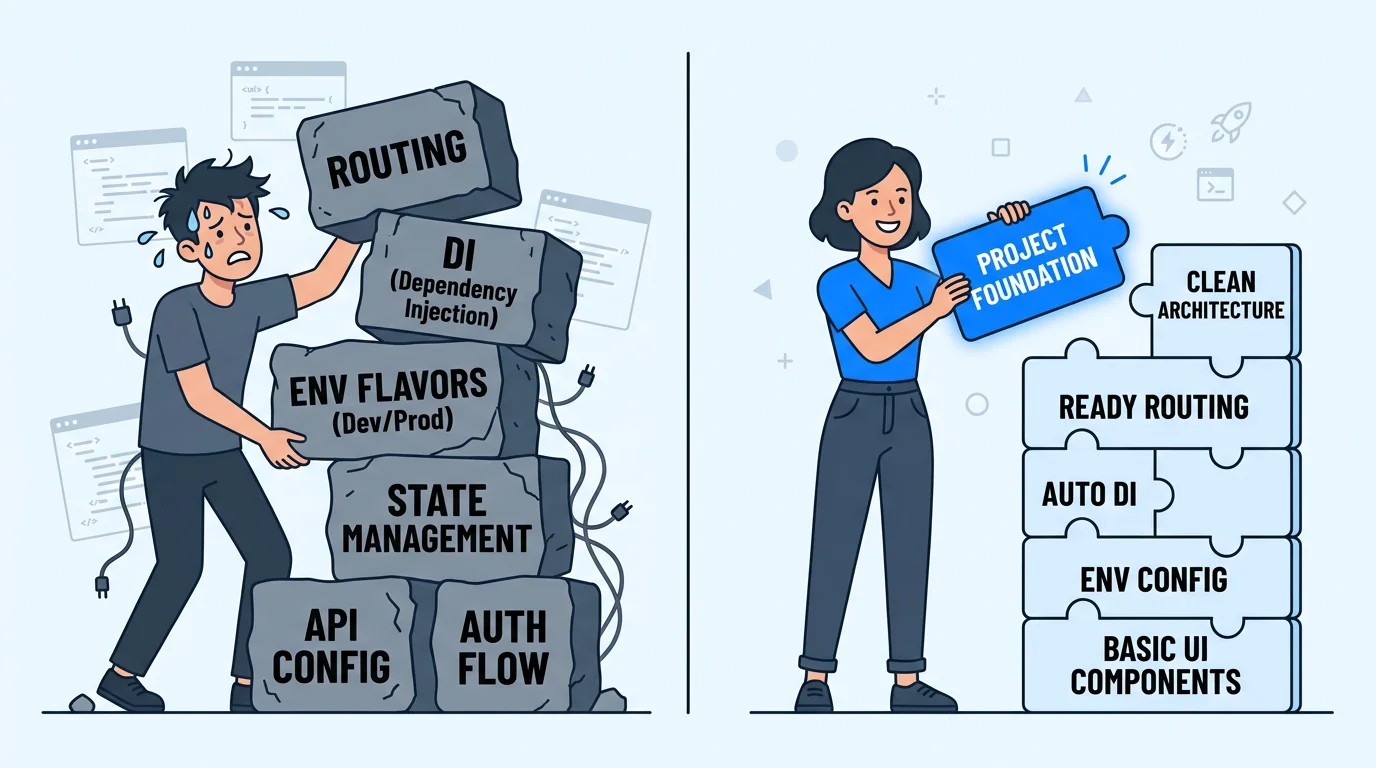
Running flutter create generates a project skeleton, not a production-ready application. The moment that console command finishes, your engineering team faces a steep climb to configure routing, dependency injection, environment flavors, and backend integrations. This manual initialization process routinely burns through 4 to 12 hours of high-concentration engineering time. For product teams and agency developers, this represents a massive, unforced delay in time-to-market.
Setting up a robust Flutter project setup requires rigid decisions that impact the entire lifecycle of the application. A senior engineer must choose a directory structure, define data models, and wire up complex third-party packages. When you introduce advanced requirements such as an offline-first Flutter architecture this foundational work quickly becomes a massive time-sink. Implementing local-first synchronization algorithms, network interceptors, and rigorous SQLite or Isar database migrations transforms a standard setup phase into a multi-week infrastructure headache.
This heavy technical burden is exactly why pragmatic agencies rely on production-ready templates and SaaS-in-a-Box bundles from Stacklyn Labs. By leveraging pre-built, feature-first architectures, development teams completely bypass these exhausting infrastructure layers. They stop writing boilerplate and start shipping core features months faster. Recently, dynamic generation tools like FlutterSeed have also emerged to challenge the manual setup paradigm, offering an automated path to scaffolding.
If you are weighing a template against generating or hand-building a project, our guide to buying Flutter app templates covers what to check in the code before you pay.
The Trap of the Manual Setup Paradigm
Manual setup remains the default path for many developers, offering complete control over every byte of the codebase. However, this granular control introduces heavy technical risks and operational friction that scale poorly across teams. You are fundamentally building an entire platform's foundation from memory every time you start a new client project.
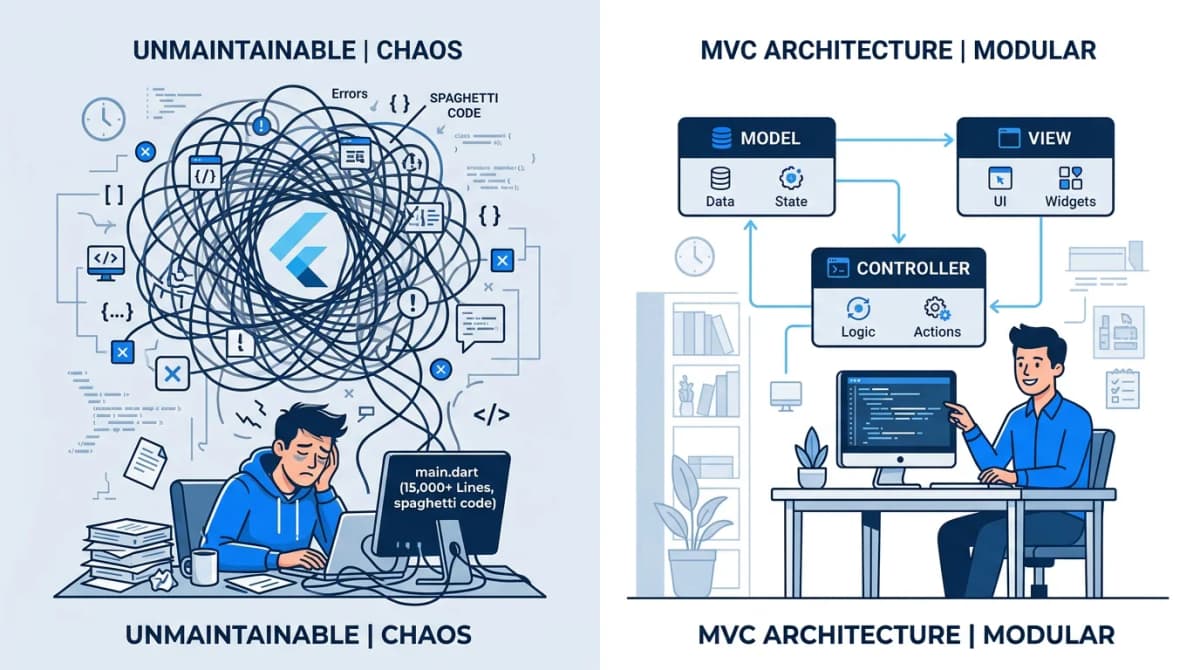
- Architecture Drift: Without a strict code generator enforcing rules, developers often implement design patterns inconsistently across different modules. What starts conceptually as Clean Architecture can quickly devolve into a tightly coupled, hybrid mess as sprint deadlines loom.
- Boilerplate Fatigue: Writing raw initialization code is tedious and a primary entry point for human error. Setting up authentication flows, custom HTTP interceptors, and complex
ThemeDatainvolves writing hundreds of lines of repetitive code before a single business feature is built. - Dependency Hell: Manually selecting packages for routing (like AutoRoute versus GoRouter) and local storage requires rigorous compatibility testing. Ensuring that your specific version of a provider works flawlessly with specific Firebase core libraries is a hidden, frustrating time-sink.
In a purely manual workflow, the lead developer acts as the compiler for the project’s foundation. The stability of that foundation relies entirely on the individual's discipline, current mood, and experience level. Relying on human discipline for structural consistency is an architectural anti-pattern.
Visual Graph-Driven Generation: The FlutterSeed Approach
To solve the friction of manual initialization, tools like FlutterSeed shift the responsibility of project scaffolding from the engineer to a deterministic engine. FlutterSeed operates as a visual, node-based application initializer. Instead of relying on static, quickly outdated Flutter boilerplate repositories, it uses a graph-driven engine to generate customized code based on your explicit inputs.
The Node-Based Logic Under the Hood
Unlike traditional template cloning, FlutterSeed allows developers to interact with a visual interface to select specific architectural nodes. You define the application's DNA before writing any custom logic. This node-based system dynamically writes code for several core pillars:
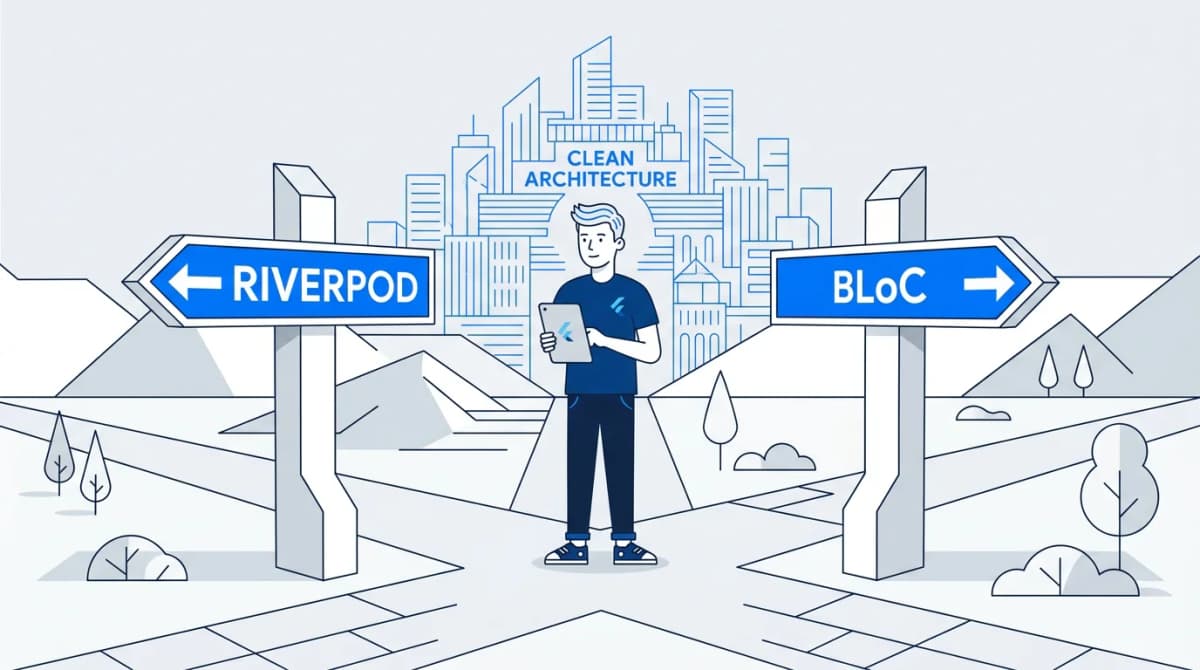
- State Management in Flutter: The engine allows developers to inject their preferred reactivity model. Options include Riverpod for functional, compile-safe reactivity, BLoC for strict, event-driven enterprise state, and Provider for basic dependency injection.
- Backend Integration: The tool outputs pre-configured, modular repositories for external services. Developers can inject Firebase, Supabase, or generic RESTful API adapters directly into the generated codebase.
- Design Systems: FlutterSeed automates the injection of comprehensive Material 3 or Cupertino design systems. This guarantees that your typography, color schemes, and component styling follow standard guidelines out of the box.
- Routing Architectures: The system deterministically generates navigation stacks and route guards. This eliminates the boilerplate required to set up deep linking and guarded authentication routes.
The output is a compressed file containing a structured project that strictly adheres to established industry best practices. Because the generation process is heavily deterministic, the resulting codebase is entirely predictable. This reproducibility is highly valuable for agency teams looking to standardize their technical output across multiple different client projects.
Deterministic Output vs. Hand-Coded Skeletons
To understand the actual value of an automated initialization tool, we must evaluate it against manual engineering across three primary technical metrics. The differences highlight why dynamic generation is replacing static git cloning.
1. Velocity and Time-to-Code
The most immediate difference is the sheer reduction in time-to-code. Bootstrapping a full-stack Flutter application with secure authentication, a structured database, Riverpod state, and localized string support typically takes a senior engineer a full workday. FlutterSeed compresses this entire pipeline into a few minutes of visual configuration. By selecting targeted templates like an E-commerce build or a Supabase Full-Stack configuration, the engine injects repository patterns and structured data models immediately.
2. CLI Integration and the Developer Experience
Professional engineers inherently prefer terminal-based, keyboard-driven workflows over clicking through web interfaces. FlutterSeed bridges its visual builder with the local development environment through a dedicated command-line interface.
By executing standard package commands such as npm install -g flutterseed-cli followed by flutterseed init [app_name] engineers pull their visual configurations directly into their IDE. This workflow heavily mimics the premium Developer Experience (DX) found in modern web frameworks like Next.js. Historically, the Flutter ecosystem has lacked this level of integrated, dynamic scaffolding in its default initialization tools.
3. Enforcing Architectural Consistency
One of the strongest technical advantages of using an automated tool or a Stacklyn Labs SaaS bundle is the enforcement of a Feature-first directory structure. In large-scale, production applications, organizing code by feature (e.g., /features/authentication, /features/user_profile) scales infinitely better than organizing by technical function (e.g., /models, /views, /controllers).
A Feature-first approach isolates domain logic, making the codebase easier to test, refactor, and assign to parallel development pods. Out of the box, FlutterSeed structures your project exactly this way. This drastically reduces the cognitive load for new developers onboarding onto an existing codebase, as they know exactly where to find the UI, state, and repository for any given feature.
Evaluating the Tech Stack: Opinionated Defaults vs. Flexibility
A common and valid critique of code generators is that they are overly opinionated, forcing developers into rigid, inflexible workflows. Tools that enforce proprietary internal libraries often create significant technical debt. FlutterSeed approaches this by offering a Custom Flow, relying exclusively on open-source, industry-standard packages.
State Management Paradigms
By explicitly supporting the ecosystem's most heavily used state solutions (Riverpod, BLoC, Provider), the engine accommodates varying engineering philosophies. State management in Flutter is highly subjective; what works for a lightweight utility app will fail in a massive enterprise system. Riverpod is frequently chosen by modern teams for its robust compile-time safety and simplified provider overriding during testing. Conversely, BLoC is often mandated in strict enterprise environments because it forces a rigid separation of concerns via event streams.
Backend Agnosticism
The inclusion of Supabase alongside Firebase represents a major technical advantage for teams dealing with complex data. Firebase relies on a NoSQL document structure, which is fast but notoriously difficult to query across multiple relational data points. Supabase provides a fully managed PostgreSQL backend, giving developers access to strict relational schemas, complex joins, and advanced row-level security.
Wiring up the distinct client initialization logic for these different paradigms is a notorious pain point in manual project setups. FlutterSeed handles the boilerplate for both, configuring the client, injecting the authentication interceptors, and structuring the data layer automatically.
The "Black Box" Trade-Off
While dynamic code generation offers massive advantages in velocity and standardization, senior engineers must always calculate the "Black Box" risk. When a CLI tool generates 2,000 lines of foundational code in three seconds, your team inherits the responsibility of maintaining it. If a bug occurs deep within the generated network interceptor, your engineers must possess the skill to trace and resolve it.
However, because FlutterSeed exclusively utilizes heavily documented, standard pub.dev packages rather than hidden proprietary wrappers, this risk is well-mitigated. The learning curve for maintaining the generated code is essentially identical to the learning curve of standard Flutter development.
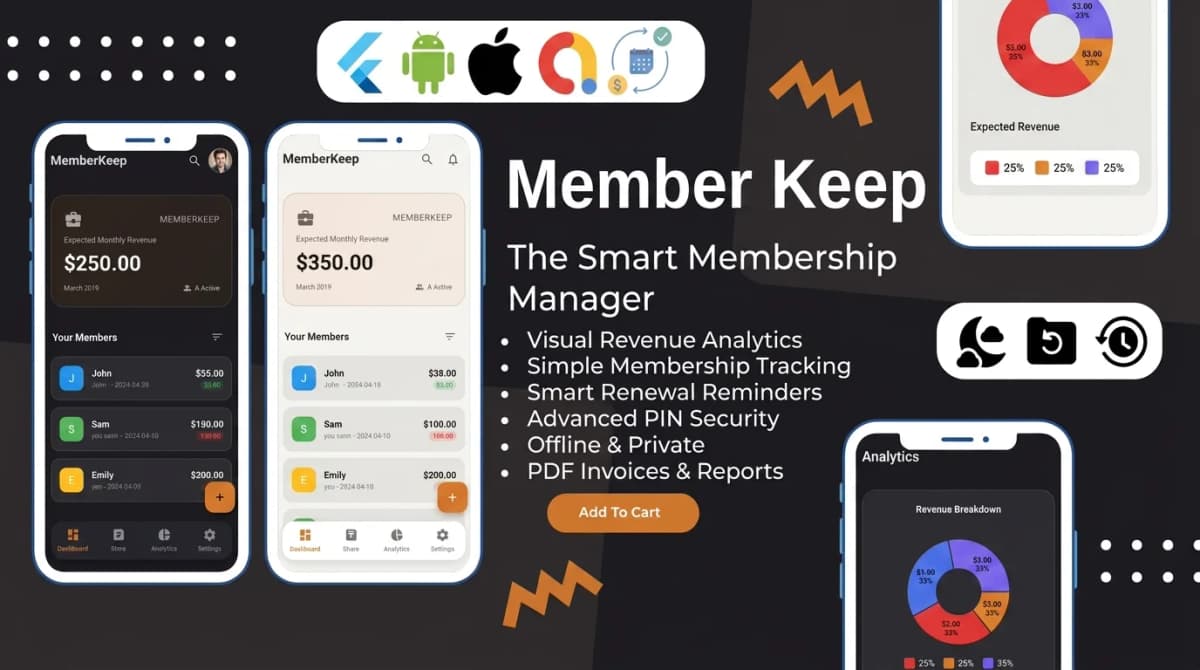
Still, a generator hands you thousands of lines you did not write, and you own every one of them from day one. If that is the part that worries you, the other route is to start from a finished app instead of a generated skeleton. Our Flutter and web templates take that route: the foundation is already built into a working app, so your hours go to the features your client asked for.
Architecture Setup Comparison
Metric
Manual Setup (flutter create)
FlutterSeed Generation
Customization
High (Total control over all code)
Moderate/High (Bound by node options)
Time Cost
High (8 to 12 billable hours)
Low (Minutes via CLI generation)
Consistency
Variable (Depends on developer discipline)
High (Strictly deterministic output)
Boilerplate Work
High (Manual typing of all foundations)
Automated (Engine handles plumbing)
The Pragmatic Engineer's Path Forward
The manual setup process is rapidly becoming an outdated bottleneck for modern mobile development teams. As application architecture grows heavier with complex state models, offline-first synchronization demands, and stringent design systems, starting from a blank canvas is an indefensible waste of capital. Your code is a liability, and minimizing the code you have to write manually directly increases your application's stability.
Whether you adopt dynamic generators like FlutterSeed for rapid MVP iteration, or integrate comprehensive, production-grade SaaS-in-a-Box architectures from Stacklyn Labs for massive enterprise builds, the directive remains the same. Automate your foundational plumbing. Standardize your starting line. Force your engineers to spend their mental energy strictly on writing unique business logic and refining the user experience.
References & Further Reading
- FlutterSeed Official Documentation and Platform: Verified node-based graph builder logic, available templates, and CLI installation commands.
- Flutter Official Documentation: Benchmark for standard project creation and architectural patterns.
- Pub.dev Package Repository: Verified industry-standard status of supported tech stacks including Riverpod, BLoC, Supabase, and Firebase.
- Community Standards on Flutter Architecture Best Practices: Verified Feature-first approach validity for enterprise scalability and modular development.

Written by Stacklyn Labs
Stacklyn Labs is a small studio publishing offline-first Flutter templates on CodeCanyon and Codester since 2025, and building custom Flutter and web apps for the teams who buy them.