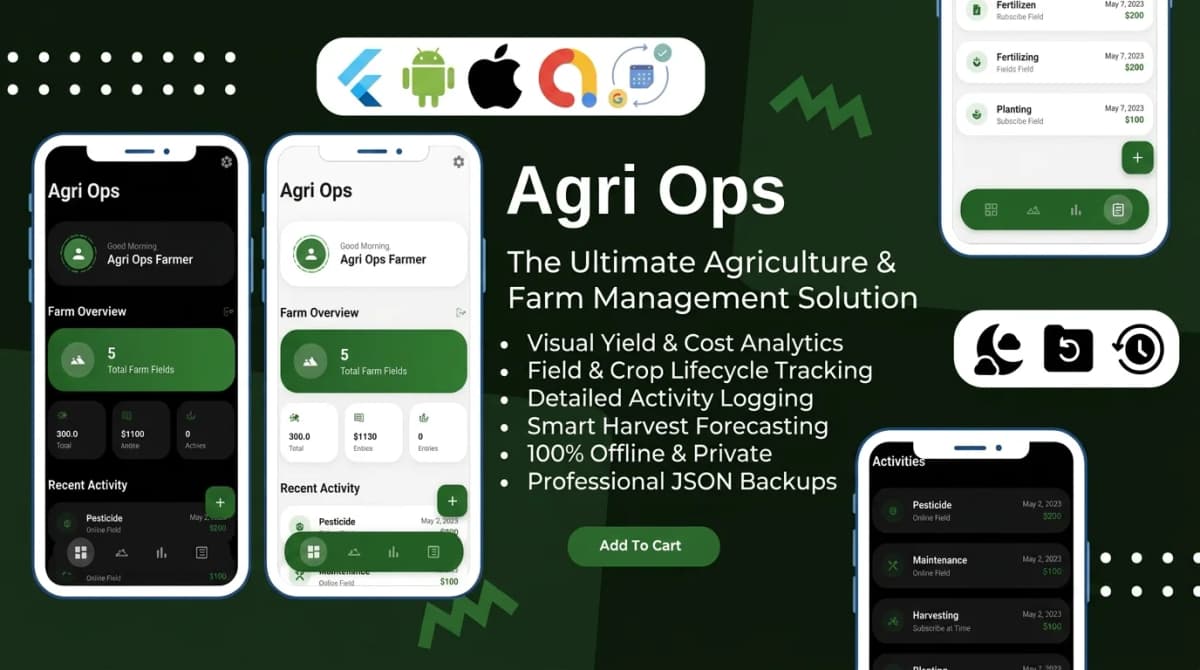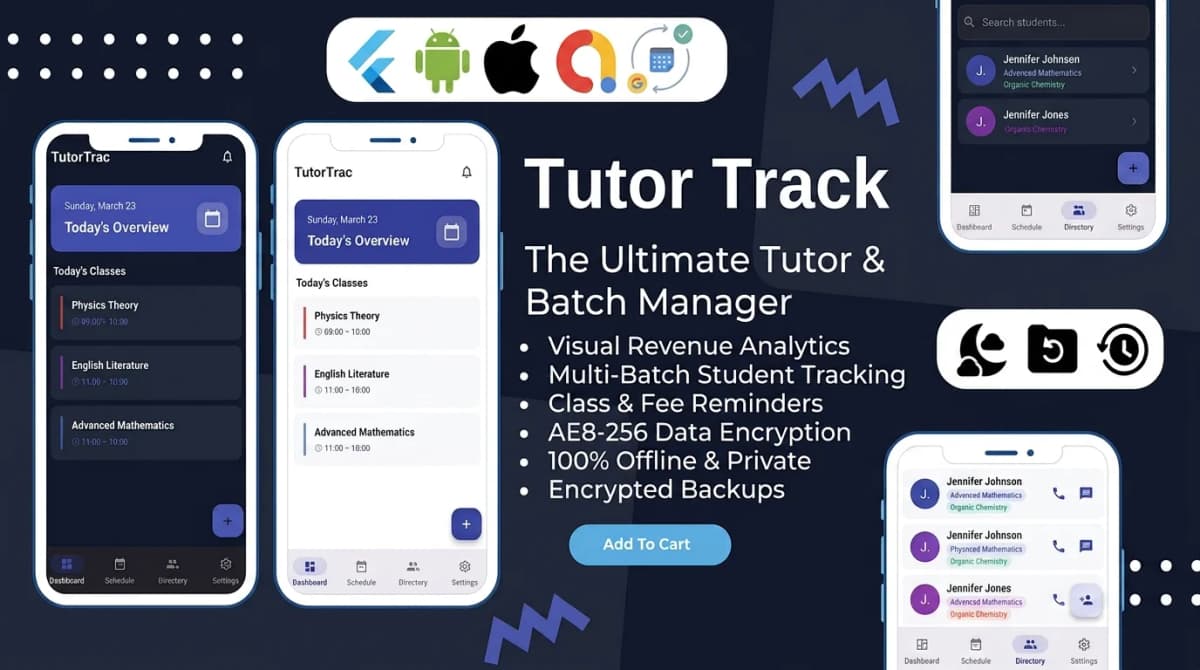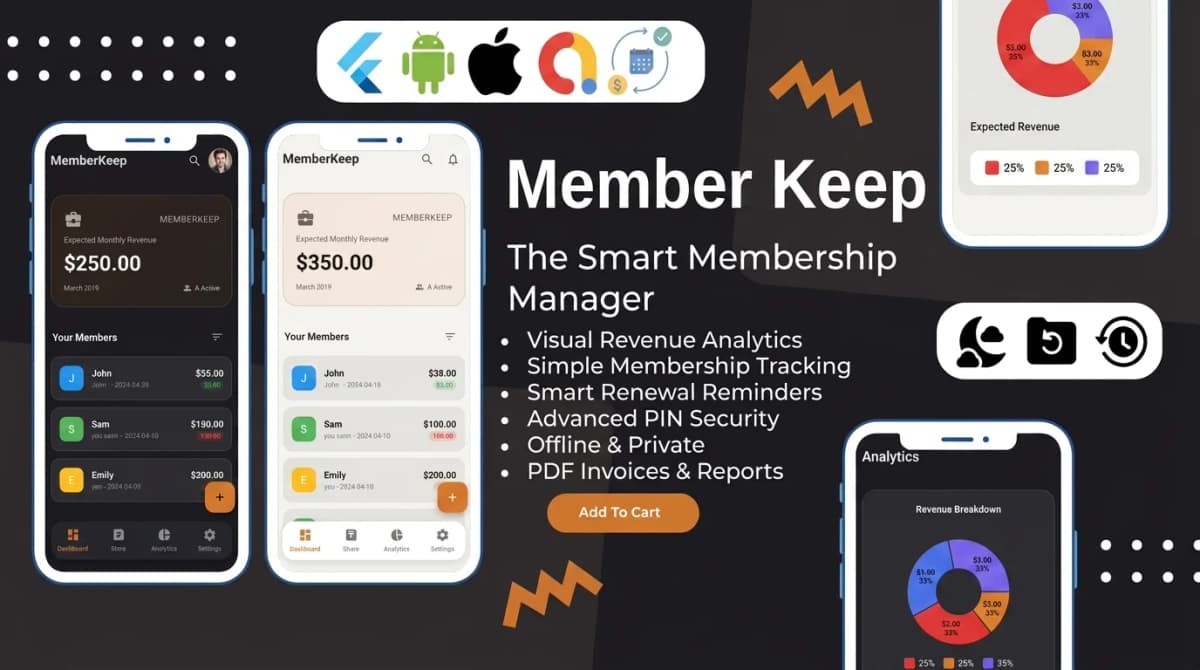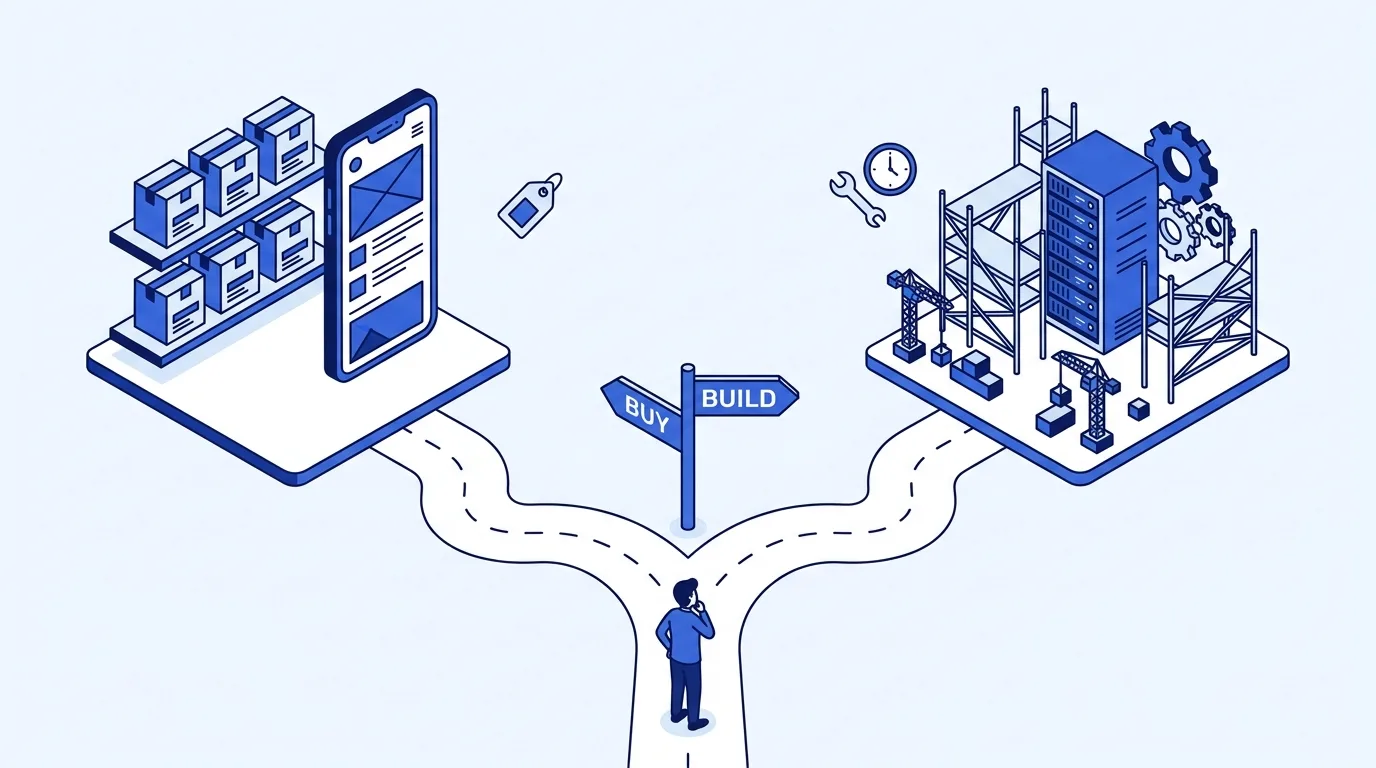
You have two tabs open. One is a freelancer's reply to your brief, with an estimate in weeks and a price that assumes nothing goes wrong. The other is a CodeCanyon listing for a Flutter app that already has the booking screen, the client list and the revenue chart you sketched on paper, for $29.
That is the buy app template vs build from scratch question as most founders meet it, and the price gap makes it look easy. It is not, for two reasons. The template price is rarely the biggest number on the buy side of the bill. And the question that settles it is not about cost at all. It is about where your app is different from every other app of its type.
This post works through that test, puts real numbers on the buy side using prices we publish ourselves, and is honest about when buying is the wrong call. If you have already decided to buy and want to know what to check on a listing first, our guide to buying a Flutter app template covers the code, licence and refund side in depth.
One note on where we stand. We sell templates, and we also take on custom development, so we get paid whichever way you go. That is the reason to treat the numbers below as published prices you can check, not as a pitch for one side.
The real question: where is your app different?
Founders usually frame this as cost against control. The test that actually decides it is narrower: which layer of your app would a customer notice if you swapped it for a competitor's?
If your difference is in the product, buy. The product layer is the niche you serve, the workflow you understand better than anyone, your brand, and the way the screens feel to someone who does this job every day. The layers underneath are the same in every app of its type. A salon app needs appointments with statuses, a client list with visit history, and a way to back the data up. A template author has already built those, and your money is better spent on the part users choose you for.
If your difference is in the infrastructure, build. That means custom sync between devices, many people editing the same records at once, scale one phone cannot handle, or rules about where data is stored and who can audit it. A template's architecture was chosen for someone else's requirements. You would spend your budget working against it, and end up with something harder to maintain than a clean build.
Other posts ranking for this search make the same split, and the two we read most closely come from template sellers, as this one does. Where it gets misread is the word infrastructure. For a Flutter business app, three questions cover it:
- Where does the data live? On one device, or shared between users and devices.
- Who has to trust it? Only the owner, or an auditor, a regulator or a client's IT team.
- How does it grow? Hundreds of records on one phone, or many users hitting a server someone has to run.
If all three answers are the simple ones, your infrastructure is standard and you are in buy territory, however unusual the idea is. If any one of them is the hard answer, read the section on when not to buy before you spend anything.
What buying actually costs, using our own prices
The template price is the line everyone compares, and it is rarely the biggest one. Here is the whole buy side, using our published prices and the platforms' own fees as they read today, so you can check each number.
| Cost line | What it covers | Price |
|---|---|---|
| Template | Source code for one end product | Our Bootstrap landing pages are $10; our Flutter apps are $29 |
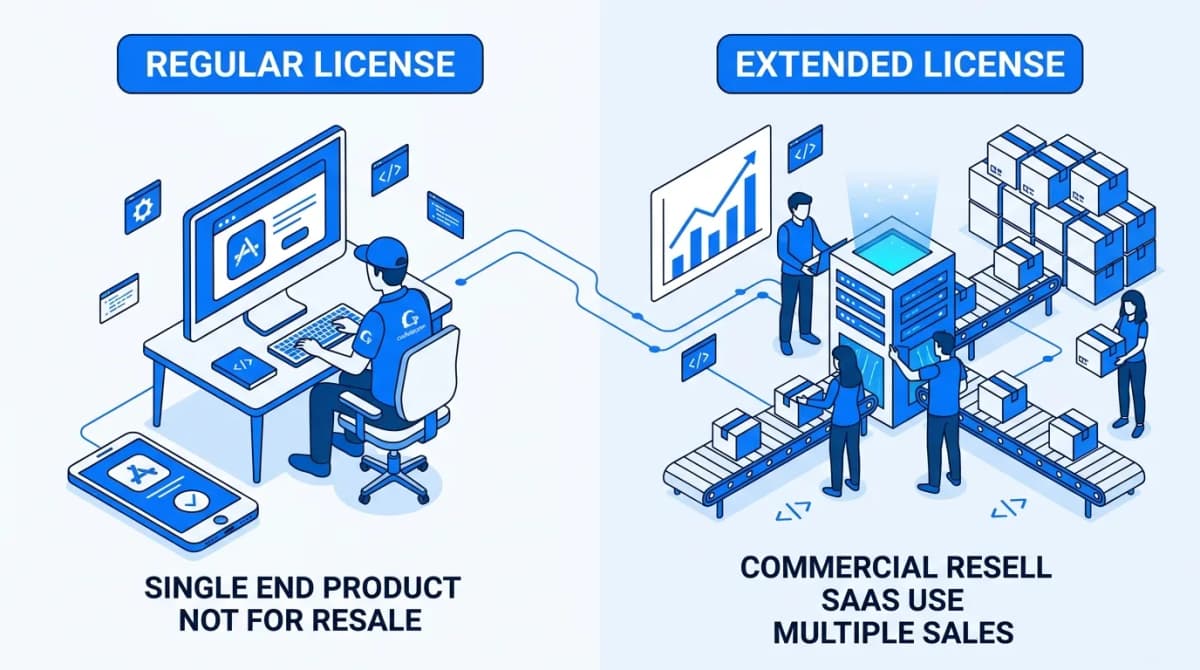
| Licence upgrade, if users will pay | An Extended Licence; on CodeCanyon its price is set per item | Our two directly sold Flutter apps list $99 Extended against $29 Regular |
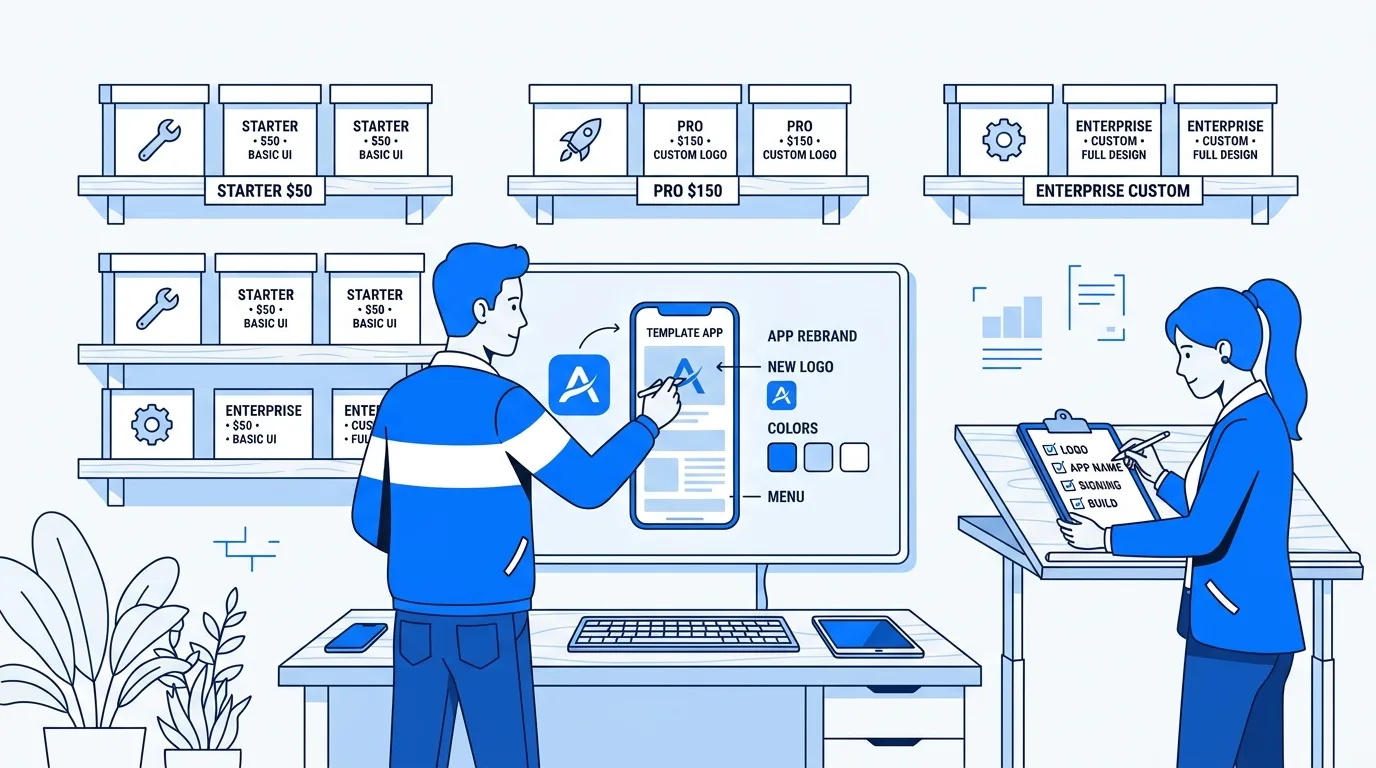
| Rebrand and setup | Name, logo, colours, package name, signing, store-ready build | Your own time, or our reskin tiers: Starter from $50, Pro from $150, Enterprise quoted per project |
| Google Play account | One-time developer registration | US$25 |
| Apple Developer Program | Required to publish on iOS | 99 USD per membership year; Apple notes prices may vary by region |
| Closed test on Play | Personal accounts created after 13 November 2023: 12 testers opted in for 14 continuous days before production access | No money, at least two weeks of calendar time |
| Server hosting | Only if the template needs a backend | None on ten of our eleven Flutter apps; a monthly bill on templates with an admin panel or API |
Add up two honest versions. A $29 Flutter template on a Regular Licence, rebranded by you, launched on Android only: $54 and the weekends it takes you. The same template with a Pro reskin and both stores: from $303 in the first year, before any server. Neither number is hidden. They are just rarely added up before checkout.
Two lines on that table catch people more than the rest.
The licence. CodeCanyon's licence page splits the two licences on whether end users pay. The Regular Licence covers a free end product. The Extended Licence covers one that is sold, and both cover a single end product. A free app that later adds a subscription has moved from one to the other, and nothing in your build or the store review will tell you. If you are not sure yet whether you will ever charge, read through the CodeCanyon Regular vs Extended licence for Flutter apps before checkout, because the Extended price is set per item and the gap can be large.
The server. A template that ships with a Laravel or Node admin panel or API needs a server you pay for every month the app is live, plus the days to deploy, secure and back it up. We cannot price that for you; it depends on your provider and traffic. Ten of our eleven Flutter apps keep their data on the device in Hive or Isar, with no server behind them. The eleventh, Zenith, streams hosted audio, so it needs somewhere to host the files.
Do not count on the author's support for the setup work either. CodeCanyon's item support policy gives six months, extendable to 12, and excludes modifying or installing the item. The rebrand is yours to do or pay for.
What building from scratch costs
Here is where we would like to give you an hour count, and will not. We have not measured a from-scratch build that would transfer to your app. The hour and dollar figures in the posts ranking for this search are labelled by one of those authors as "Rough, illustrative numbers (not a benchmark)". A figure like that tells you nothing about your scope.
What we can give you is the list a template has already paid for. Take StyleBook, our salon and spa app. Its listing describes:
- appointment booking with Pending, Completed and Cancelled statuses
- a client list that records visit history and total spend
- notes for colour formulas and treatments
- a revenue and expense dashboard with net profit
- a full backup to a JSON file, and restore on another device
- dark and light mode, and AdMob support for a free version
Building from scratch means designing, coding and testing each of those. Then comes the work no customer sees: a local database schema, state management (StyleBook uses Provider), navigation, empty states, error handling, a theme that carries your brand through every screen, and release signing for both stores. None of it is hard on its own. All of it is time. On the build side it is also every bug fix for as long as the app lives, because nobody else ships updates to code you wrote.
Building has real advantages, and they are not small. You make every architectural decision. There is no licence to get wrong. Apple's guideline 4.2.6 on apps made from commercialized templates does not apply to an app you wrote. And your code fits your requirements instead of someone else's.
When we quote custom development, we do it per project after scoping, and we do not publish a from-price for it, because an honest range would be too wide to be useful.
Every item on that StyleBook list gets paid for in your evenings or a developer's invoice before you write the first feature that is actually yours. If your difference sits in the product layer, our catalogue has templates from $10 for landing pages and Flutter apps at $29 with that base already built, ten of them with no server to pay for.
Buy app template vs build from scratch: a decision table
Run your app through this before you collect quotes from either side.
| Signal | Points to buying | Points to building |
|---|---|---|
| Where your difference lives | Niche, workflow, content, brand | Sync, collaboration, scale, compliance |
| Where data lives | On each user's device, or a standard backend you can run | Shared live across users and devices in a way no template you can find supports |
| How much of the template survives | Most screens, with edits | Less than half |
| Number of apps | One end product | Many branded copies of the same app |
| Payment model | Decided, and the item's licence price fits it | Undecided, and the item's Extended price would break the budget |
| Stack | One you or your developer will maintain for years | One nobody on your side wants to own |
| Maintenance | Item updated recently, author answers comments | No updates since launch |
| Timeline | Fixed launch date, standard feature set | Time to build properly, and a reason to |
Do not read it as a vote. One row on the right can outweigh six on the left, and the data row is the one that most often does. A salon app with a brilliant niche angle is still a build, or a much bigger project than a reskin, if four stylists need to see the same appointment book live.
When not to buy a template
These are the cases where buying is the wrong call, including ones where our own templates are.
Your users need to share live data
Our templates are the clearest example. StyleBook's listing describes all data as stored locally on the device, with backup and restore through a JSON file. That is why it needs no server, and it is also a hard limit: a file you export and import is a transfer, not sync. If a salon owner and three stylists need the same bookings on four phones in real time, StyleBook as shipped is the wrong base, and so is any offline-only template.
Adding sync later is not a feature toggle. It needs a server, a sync protocol, conflict handling, and a migration of every existing user's local data. Price that as a build, not a reskin.
You need many copies of one app
Both CodeCanyon licences cover one end product, and the licence page says one licence cannot be reused across several clients. Ten branded apps for ten gyms means ten purchases. Apple adds a second problem. Guideline 4.3(a) says not to create multiple Bundle IDs of the same app, and suggests one app with the variations inside it instead. If your model is many near-identical apps, one app built for many customers may cost less than the licences and the rejections.
The template is your whole product
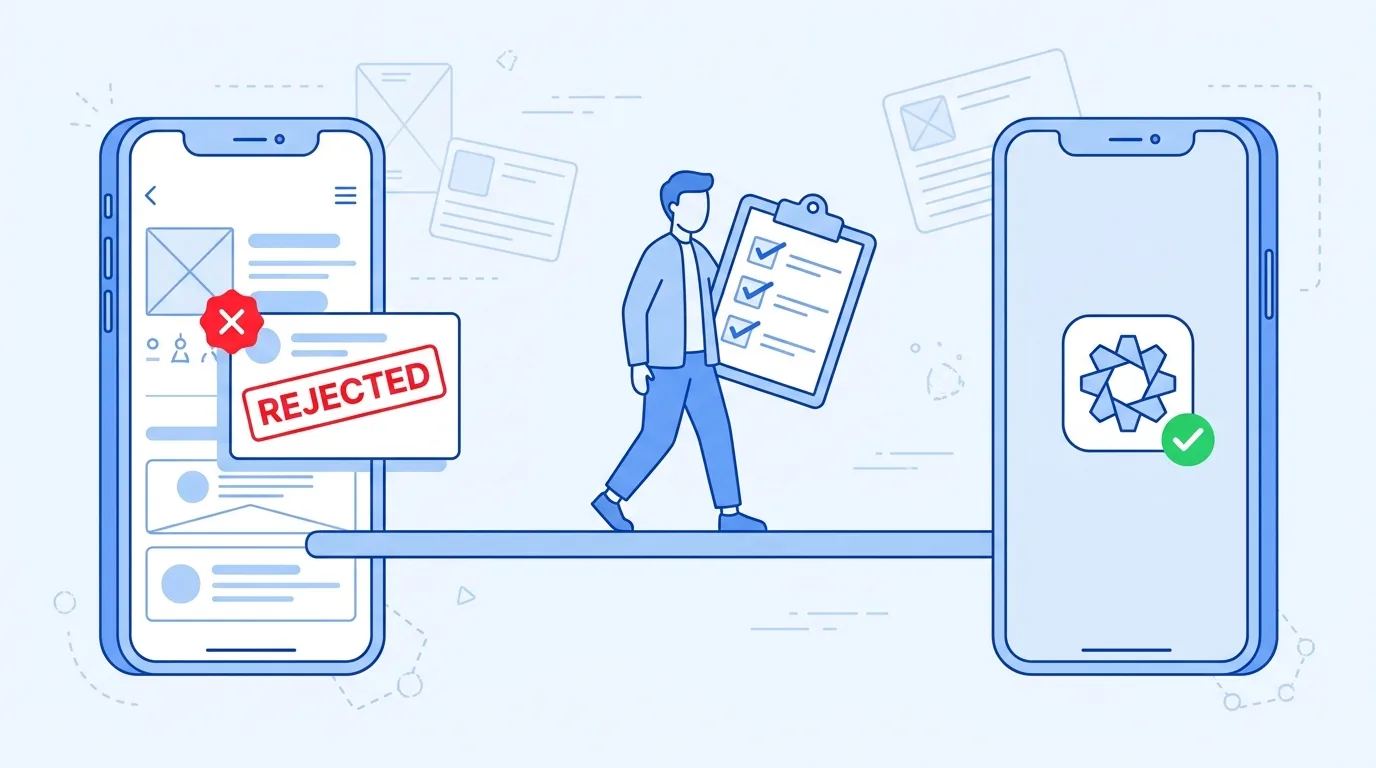
If the plan is to change the logo and publish, buying is not the problem and building will not fix it. Apple's guideline 4.3(b) rejects apps that are indistinguishable from what is already widely available, and 4.2.6 rejects template apps not submitted by the provider of the app's content, which means your own developer account. We cover both in detail in why template apps get 4.2.6 and 4.3 rejections. Your product difference has to exist before either route makes sense.
You want to sell the result as source code
CodeCanyon's licence page states that neither licence covers use in stock items or templates. If your plan is to package what you build and sell it to other developers, it has to be your own code.
Someone will audit where the data goes
If a client, a regulator or an IT department will ask where every record is stored, who can read it and how changes are logged, you need to answer from code you understand line by line. A template's data layer was not designed with your audit in mind.
Is a CodeCanyon template worth buying?
For a standard app in a niche you understand, usually yes, as long as you buy it as a starting point and not a finished product. Whether a specific item is worth it comes down to the rules you buy under.
Envato's refund policy covers items that are not as described, broken beyond the author's fix, insecure and unpatched, or missing promised support. It does not cover disappointment, a change of mind, or a buyer who lacks the expertise to use the item. The checks before checkout matter more than the refund route after it.
Watch for one licence myth while you research. At least one review site ranking for this question says client work needs the Extended Licence. CodeCanyon's licence page says a freelancer can charge a client for building an end product under a Regular Licence. What decides the licence is whether the end users pay, not whether you were paid.
Codester, where our landing pages are sold, has its own licence and refund terms, so read those on the item itself before you buy.
If the table points you to building, or to a template plus a sync layer it was never designed for, our custom development studio scopes that work and quotes it per project. If it points to buying, the next number to pin down is the rebrand, and the app reskinning cost breakdown goes through that line item by item, including the costs no quote covers.

Written by Stacklyn Labs
Stacklyn Labs is a small studio publishing offline-first Flutter templates on CodeCanyon and Codester since 2025, and building custom Flutter and web apps for the teams who buy them.