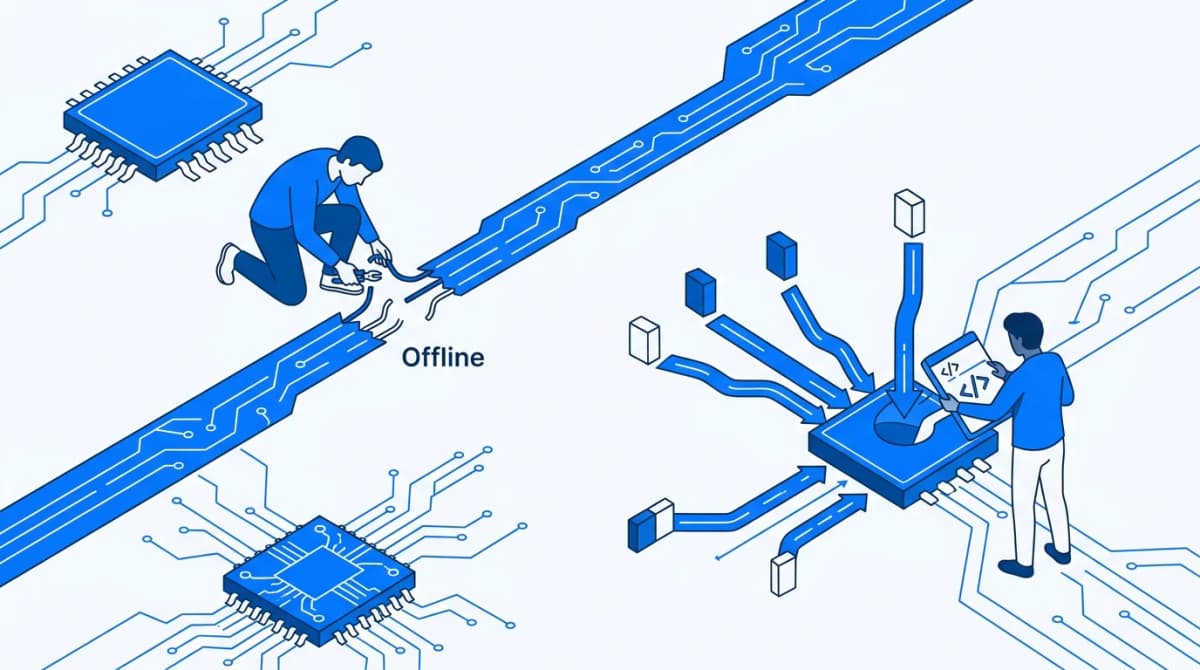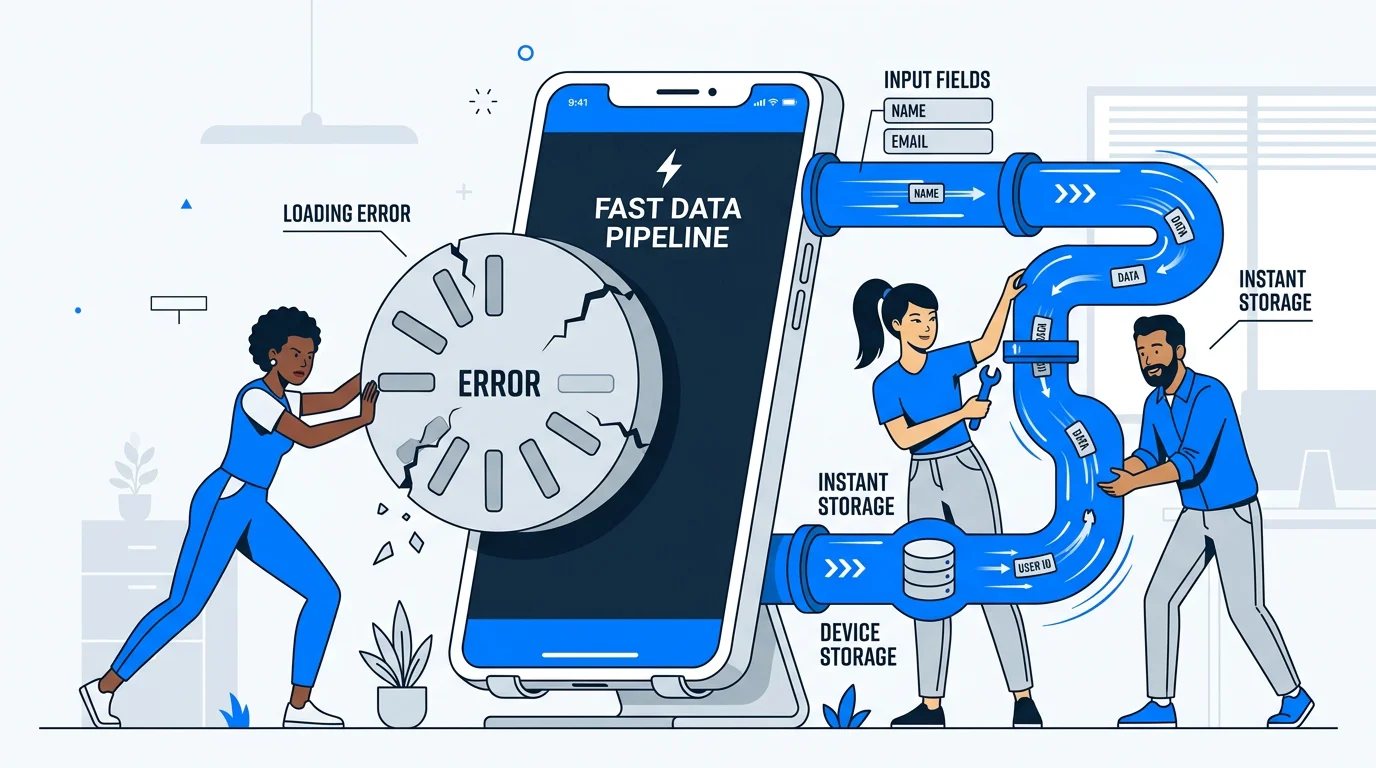
You’ve definitely been there: you tap a button to save a brilliant idea, send a message, or check off a task on your phone. But your train just entered a tunnel. Your signal drops, and suddenly, you’re staring at a spinning wheel. The app is completely frozen, waiting for a server hundreds of miles away to give it permission to continue. We’ve all experienced it, and frankly, it's a terrible user experience.
But what if your app didn't need the internet to function flawlessly? What if every tap, swipe, and save happened instantly, regardless of whether you had blazing-fast 5G or zero bars?
This is a powerful paradigm shift known as offline first architecture (and increasingly, local first development), not a pipe dream. By fundamentally rethinking how mobile apps interact with data, developers are eliminating network latency entirely and delivering experiences that feel like pure magic.
Getting this blueprint right starts with picking the local database it's built on. We walk through that decision in choosing a Flutter local database in 2026.
The Problem with "Cloud-First" Thinking
To understand why an offline first architecture is so revolutionary, we have to look at how the vast majority of apps are built today. The standard industry approach is "cloud-first." In this traditional model, the remote server is the absolute source of truth, and your phone is just a temporary window into that server.
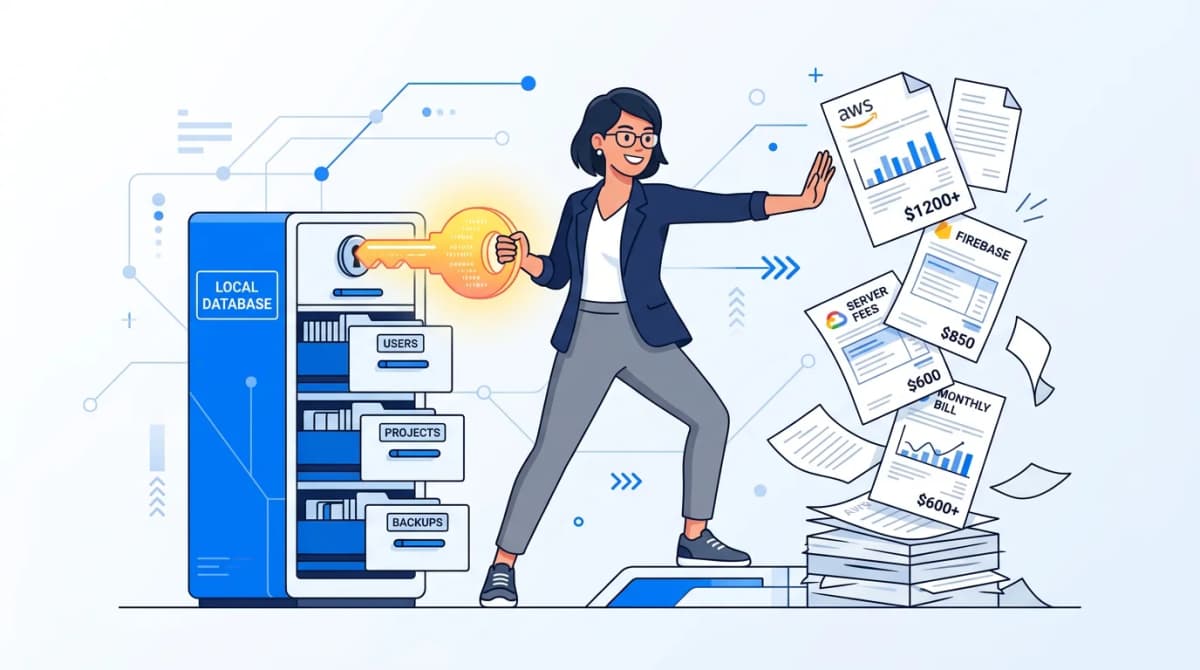
When a user wants to view their calendar, the app asks the server. When they want to add a new meeting, the app sends that data to the server, waits for the server to confirm it was saved, and only then updates the screen. Every single interaction is tied to the speed of light, the quality of the user's cellular connection, and the current load on the backend database.
Even on a great day, network requests take hundreds of milliseconds. On a bad day, or in a dead zone, the app simply breaks. Users are left staring at a blank screen or a frustrating error message. It’s a brittle experience that leads to poor app store reviews, user frustration, and ultimately, abandoned applications.
Local-First vs. Offline-First: Flipping the Script
While they are often used interchangeably, there's a subtle but important difference between offline-first and local-first development. Traditional offline caching is essentially a band-aid: the app stores some data locally just in case the internet drops, but the server remains the boss. When the network returns, the server's data overwrites the local data.
Local first development, however, flips this entire model upside down. It makes the mobile device the star of the show.
In a true local-first architecture, the primary database lives right there on the user's phone or tablet. When a user opens the app, it reads data directly from the local database. When they tap "save" or "like," the app writes that data directly to the local database.
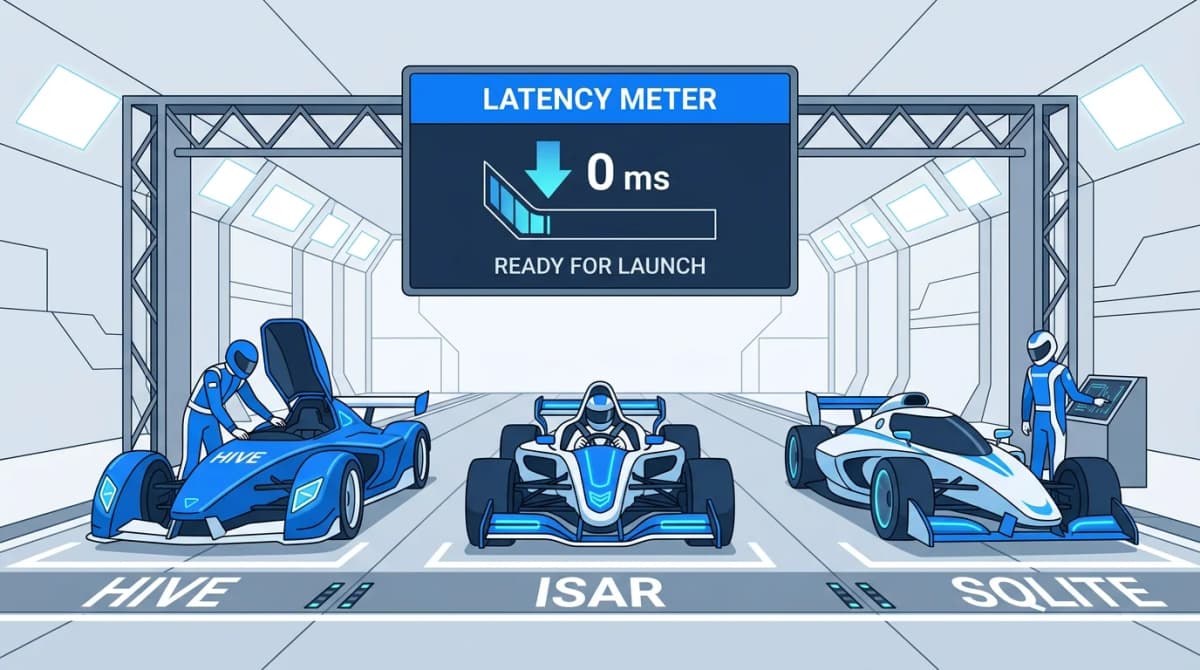
Because the data is stored on the physical device, reads and writes happen in a matter of milliseconds. The user interface updates instantly. There are no loading spinners, no network timeouts, and no waiting.
But what about the cloud? Don't we need servers? Yes, but their role changes dramatically. Instead of being the gatekeeper for every interaction, the server becomes a background synchronization partner. A dedicated sync engine quietly runs in the background, pushing local changes to the cloud and pulling down new data from the server whenever a reliable network connection is available.
How Routing Through a Local Database Eliminates Latency
Here’s how this zero-latency magic actually works. When you route all reads and writes through a local database, you completely decouple the user interface from the network's volatility.
Imagine a zero latency mobile app designed for field workers, like an equipment inspection tool. A worker deep in a basement, miles away from a cell tower, fills out an extensive safety form and hits submit. Here is exactly what happens in a local-first system:
- Instant Write: The app writes the form data directly to the on-device database. Since this is a local disk operation, it takes a fraction of a millisecond.
- Instant Feedback: The user interface immediately updates to show a green "Success!" checkmark. The worker doesn't wait; they instantly move on to their next inspection.
- Queueing: The app's background sync engine flags that new record as "pending upload."
- Silent Syncing: Finally, when the worker walks out of the building and reconnects to a cellular network, the sync engine silently uploads the pending data to the server in the background.
The user never waited. They never saw a loading screen. To them, the app is infinitely fast and 100% reliable. That is the raw power of a zero latency mobile app.
Tackling the Sync Challenge
Of course, building offline-first apps isn't without its technical hurdles. The absolute hardest part of this architecture is synchronization. When multiple devices can edit the same data offline, what happens when they all reconnect and their changes conflict?
Modern local first development solves this with robust, predetermined conflict resolution strategies. The simplest and most common approach is "Last Write Wins" (LWW), where the most recent timestamp takes priority. This works perfectly for most standard mobile applications where users are editing their own personal data.
For more complex, highly collaborative apps (think Notion or Google Docs), developers utilize Conflict-Free Replicated Data Types (CRDTs). These are brilliant mathematical data structures that guarantee concurrent offline edits can always be merged back together without losing any data.
The most important lesson for developers is that you cannot simply "bolt on" offline support as an afterthought. Trying to add offline caching to an app that was designed to be cloud-first usually results in a buggy, fragile mess. True offline first architecture must be baked into the data layer from day one: retrofitting it later is far more expensive than starting from a codebase where it's already the foundation, which is why Vet Vault was built local-first from its first commit rather than patched afterward.
The Flutter Ecosystem Advantage
At Stacklyn Labs, we specialize in creating high-performance, cross-platform mobile apps, and we rely heavily on the Flutter and Dart ecosystem to bring these visions to life. Building local-first apps in Flutter has never been easier, thanks to a rapidly maturing landscape of incredible tools.
While older key-value stores paved the way for local caching, today’s modern apps often rely on highly optimized SQLite wrappers. Tools like Drift provide robust, type-safe local databases that handle complex relational data directly on the device with blistering speed.
For the synchronization layer, powerful new platforms like PowerSync are completely changing the game. They allow developers to seamlessly replicate data between a backend PostgreSQL database and a local SQLite flutter offline database. This means we can deliver the incredible zero-latency speeds of a local database without having to manually wire up complex, brittle synchronization logic from scratch.
The Compounding Benefits of Going Local-First
The benefits of building this way extend far beyond just speed. Let's look at the compounding advantages of adopting an offline first architecture:
- Unshakable Reliability: Your app works in airplane mode, on subways, and in the middle of nowhere. A recent industry study on mobile app reliability found that offline-first apps maintain an 89% user satisfaction rate during network drops, compared to just 23% for their cloud-only counterparts. When users know your app won't let them down in a pinch, brand trust skyrockets.
- Enhanced Privacy and Data Ownership: Because the primary copy of the data lives on the user's physical device, you can offer significantly greater privacy. Sensitive information can be encrypted locally or even kept entirely on-device, never touching a remote server if it doesn't need to.
- Simplified State Management: Believe it or not, local first development can actually make a developer's life significantly easier. When the local database acts as the single, undeniable source of truth, you often don't need complex state management libraries to juggle loading states, error states, and cached API responses. You simply listen to the local database, and the UI reacts immediately to any changes.
Conclusion
The era of making users wait for slow cloud servers is ending. Mobile users today expect their apps to be instant, responsive, and fiercely reliable, no matter where they are or what their network indicator says.
By embracing an offline first architecture routing all data through a local database and silently syncing in the background you can finally deliver a true zero latency mobile app. It requires a fundamental shift in how we think about data ownership and synchronization, but the payoff is an application that feels flawlessly fast and incredibly resilient.
If you’re ready to stop spinning your wheels and start building lightning-fast digital experiences, we’re here to help. Stacklyn Labs is a forward-thinking tech and software consulting company specializing in robust, cross-platform mobile applications, custom web solutions, and scalable digital architectures. Whether you need a high-performance Flutter app built from the ground up or a reliable local-first architecture for your next big project, our expert team has the exact skills to make it happen. Let’s build an app your users will love even when they’re completely offline.
References & Further Reading
- The Ink & Switch Manifesto: "Local-first software: You own your data, in spite of the cloud" – The original, highly influential online essay by the Ink & Switch research lab that outlines the seven core ideals for local-first applications.
- Conflict-Free Replicated Data Types (CRDTs): An exploration of the mathematical data structures (first formalized by researchers like Marc Shapiro in 2011) that allow multiple offline devices to independently edit data and merge it seamlessly without conflicts.
- Drift Documentation: The official guides for Drift, Flutter’s premier reactive, type-safe SQLite database wrapper used for managing complex relational data directly on a user's mobile device.
- PowerSync Architecture: Technical documentation on implementing real-time sync engines that bridge backend PostgreSQL databases with local SQLite flutter offline databases to enable true zero-latency performance.

Written by Stacklyn Labs
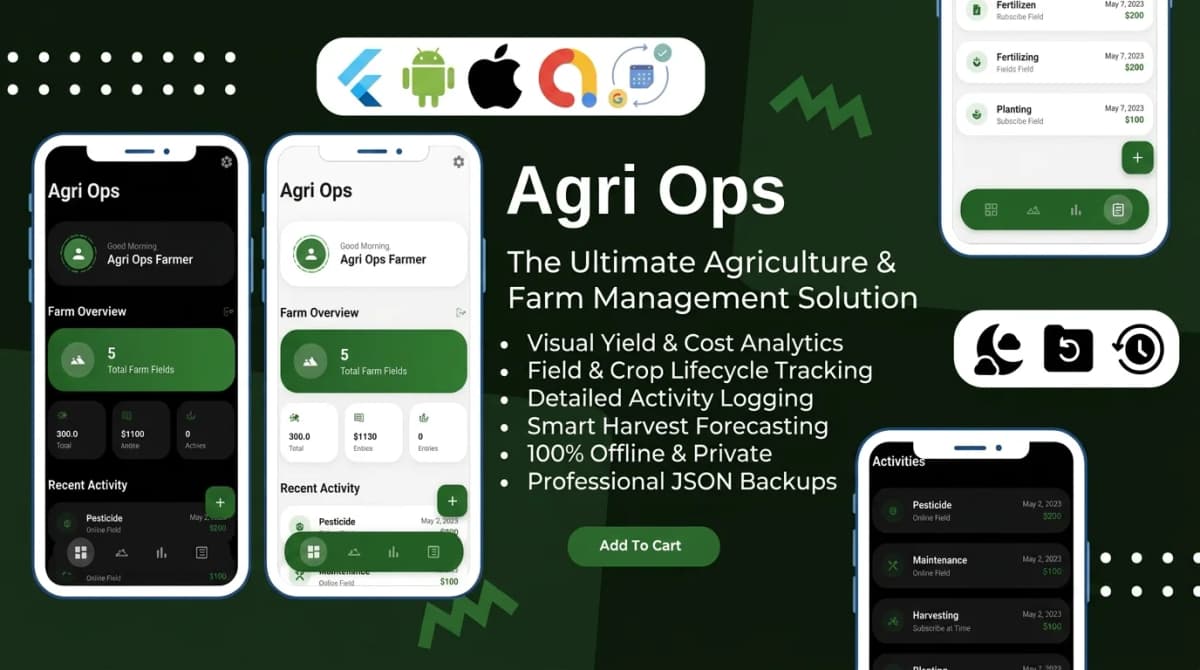
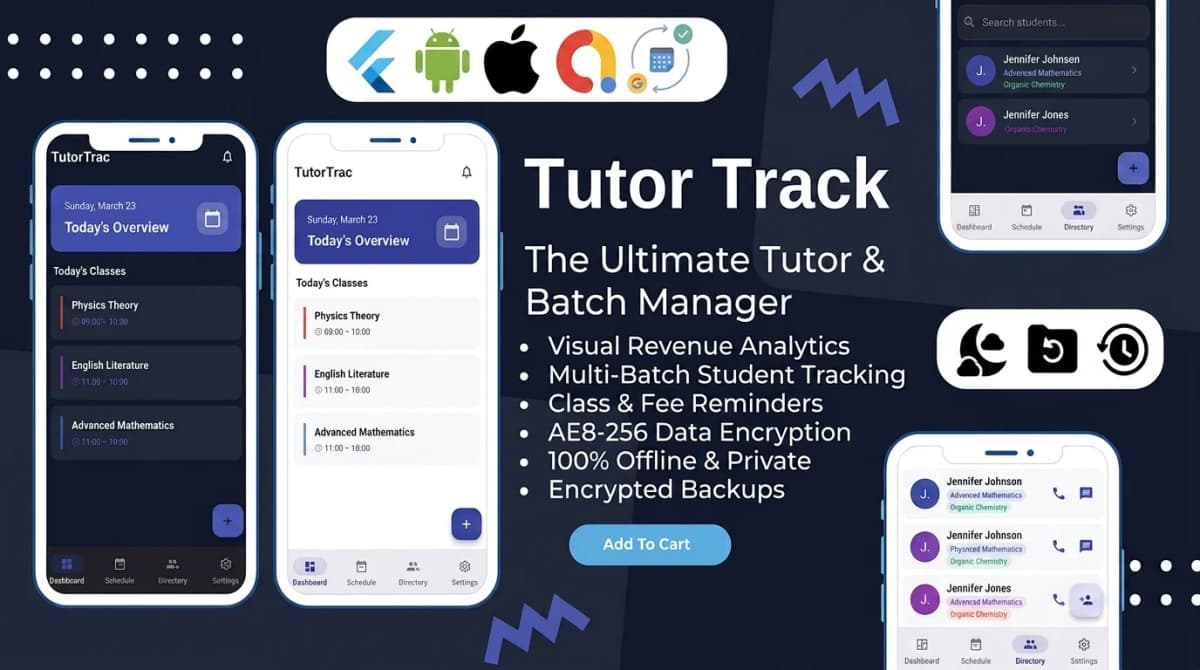
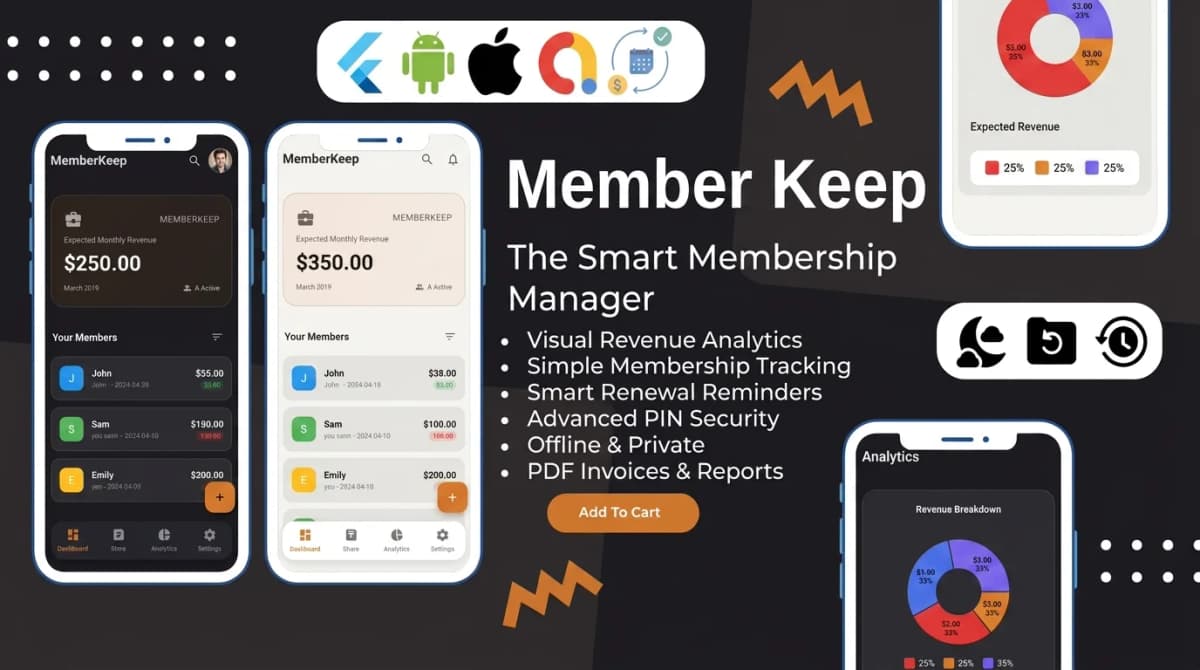
Stacklyn Labs is a small studio publishing offline-first Flutter templates on CodeCanyon and Codester since 2025, and building custom Flutter and web apps for the teams who buy them.