Processing a handful of documents synchronously is fast. Processing 10,000 documents synchronously will block your main thread for hours.
To achieve high throughput, you must transition from synchronous execution to an event-driven Worker Pool architecture. We use Redis Pub/Sub to completely decouple task creation from task execution.
The "Dispatcher" simply receives API requests, formats them into a standardized schema, and pushes them into a Redis queue. It immediately returns a 202 Accepted response to the client. The "Workers" live on completely separate infrastructure, pulling jobs from the queue at their own pace.
This decoupling allows you to scale horizontally. During massive spikes in traffic, you can spin up fifty new worker containers. The dispatcher remains unaffected, and the queue drains rapidly.
Building this event-driven messaging layer manually is exactly the kind of tedious infrastructure setup that slows down product launches. Agencies leverage Stacklyn Labs’ SaaS-in-a-Box bundles because these Redis-backed queueing mechanisms come pre-configured, letting teams focus strictly on their core business logic.
Performance Deep Dive: Inference Optimization and Prompt Caching
When your workers rely on LLMs, latency and token costs become your primary bottlenecks. Making an API call to a massive model for every single workflow step is incredibly inefficient.
We implement Prompt Caching at the worker level to mitigate this. Many workflows require feeding the exact same system context like a 100-page policy manual or a massive JSON schema into the LLM repeatedly.
Instead of passing that massive context block over the wire every time, we cache the Key-Value (KV) pair at the inference layer. When subsequent workers request a generation using that same system prompt, the inference engine bypasses the text-processing phase. This architectural tweak reduces latency by up to 80% and drastically cuts API billing.
The Stack: Building the Controller-Orchestrator-Worker Model
For enterprise-grade reliability, an automation architecture must be separated into highly specialized tiers. Mixing routing logic with execution logic guarantees technical debt. We organize our backend into four distinct layers.
1. The Controller Layer
This is your API gateway. It receives incoming webhooks, manual triggers, and client requests. Its only job is to validate the incoming JSON schema, generate an idempotent tracking ID, and hand the payload off to the orchestrator. It does no heavy lifting.
2. The Orchestrator Engine
We use systems like Temporal.io to act as the brain of the operation. The orchestrator maintains the Distributed State Machine. It knows exactly which step a workflow is on, manages exponential backoff retries, and handles long-running pauses (like waiting for a human to approve an action via email).
3. Distributed Locking
When multiple workers scale up, you risk race conditions where two workers attempt to modify the same database row simultaneously. We implement Redlock (Distributed Locking with Redis) to ensure strict mutual exclusion. A worker must acquire the lock before mutating state, guaranteeing data integrity across the cluster.
Handling this level of distributed state coordination is exceptionally difficult when syncing data to mobile clients. In an Offline-First Flutter Architecture, handling conflict resolution (CRDTs) alongside backend race conditions requires heavy engineering. We bake this complex lock management directly into our premium Flutter templates to eliminate the friction.
4. The Replay Tester
Automating complex business logic carries inherent danger. Pushing a bad code update to your worker nodes can silently corrupt thousands of ongoing workflows. To prevent this, we maintain a dedicated Replay Testing layer in our CI/CD pipeline.
Regression Safety: Verifying Deterministic Logic with Replay Testing
Orchestrators like Temporal work by recording a history of every event that happens in a workflow. When a worker resumes a task, it replays that history to rebuild its exact state.
This means your workflow code must be entirely deterministic. If you use a random number generator or fetch the current system time directly in your workflow logic, the replay will diverge from history, and the state machine will crash.
We utilize this replay mechanic for bulletproof regression testing. We capture the state transitions of real, complex production workflows and save those logs. In our staging environment, we feed those production logs into our test suite.
Python
# Test: Verifying Workflow Logic via History Replay
def test_workflow_replay():
    # Load a complex, multi-step execution log from production
    history = load_history('prod_failure_log.json')

    # Initialize the replayer with our new code branch
    replayer = WorkflowReplayer(MyAutomationWorkflow)

    # Replayer reconstructs state. It should reach the exact same terminal state.
    result = replayer.replay(history)

    # Assert that our code changes did not break the existing state machine
    assert result.status == 'COMPLETED'
If a developer introduces a non-deterministic bug or breaks the state machine logic, this test fails immediately. It guarantees that a deployment will not break long-running processes that are currently suspended in production.
Architecting the Autonomous Backbone
Throwing more servers at a fragile Python script will not make it scalable. Resilient automation requires treating workflows as stateful, distributed systems that expect hardware failure and network degradation.
Focus your engineering talent on the specific business logic that generates revenue, not on reinventing distributed queues, managing Redlock race conditions, or hand-rolling retry logic. Use the right orchestration tools, establish strict idempotency, and cache aggressively. Ship the architecture correctly the first time, and let your machines do the heavy lifting safely.
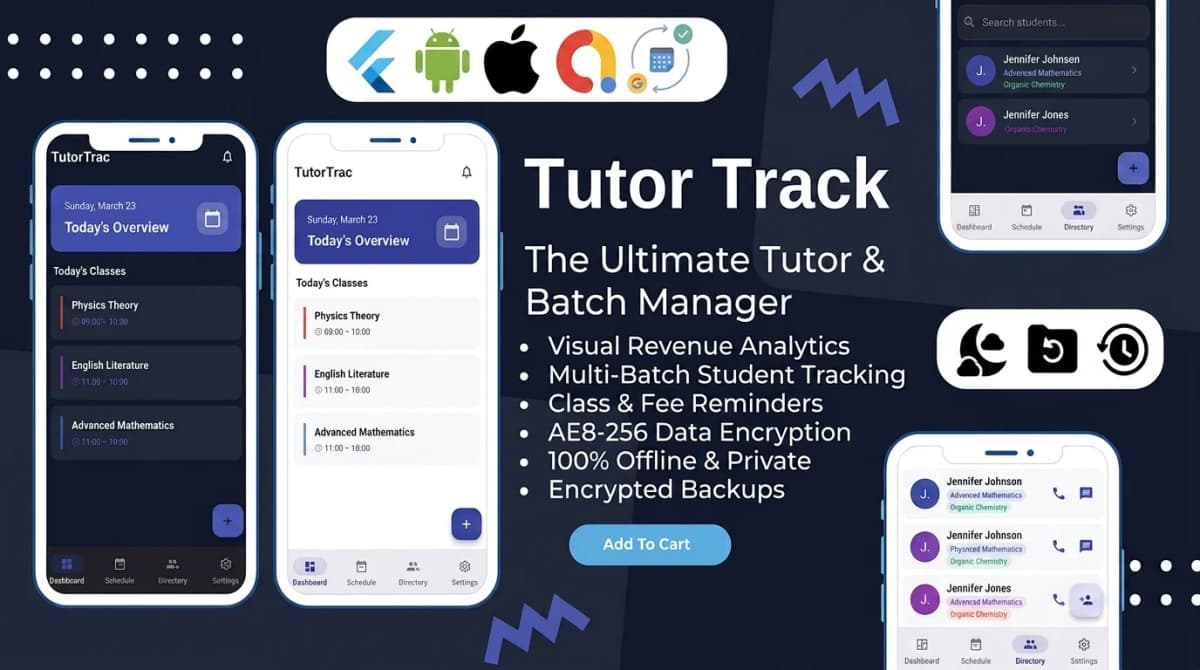
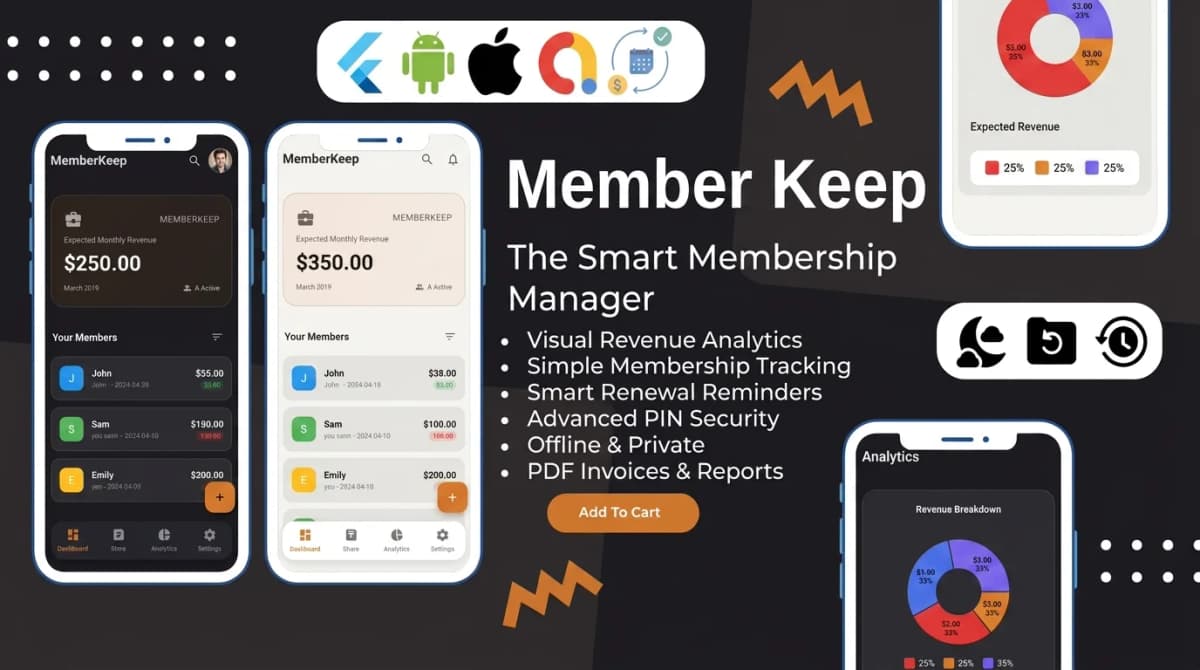
Stacklyn Labs also sells ready-to-publish Flutter app templates and web templates for teams that want to skip the boilerplate.
References & Further Reading
- Temporal: Durable Execution for Developers
- Redlock: Distributed Locking with Redis
- Stacklyn Labs: Request a Custom Automation Audit

Written by Stacklyn Labs
Stacklyn Labs is a small studio publishing offline-first Flutter templates on CodeCanyon and Codester since 2025, and building custom Flutter and web apps for the teams who buy them.