For decades, the economics of semiconductor manufacturing followed a predictable cadence governed by Moore’s Law: as transistors shrunk, logic became denser, faster, and cheaper per unit of compute. However, the generative AI era has triggered a fundamental decoupling of this logic. In the current landscape of frontier AI accelerators epitomized by the NVIDIA H100, H200, and the Blackwell (B200) series the primary cost driver is no longer the logic die itself, but the High Bandwidth Memory (HBM) that surrounds it.
Industry analysis now suggests that memory and its associated advanced packaging account for approximately two-thirds of the total Bill of Materials (BOM) for high-end AI chips. This shift represents a "Memory Wall" that is no longer just a technical bottleneck for performance, but a financial bottleneck for the scaling of AI infrastructure.
The Inversion of the Bill of Materials
In traditional server CPUs, the cost of the processor was dominated by the silicon area of the logic die. DRAM was a modular, commodity peripheral. In the context of an H100 (80GB HBM3) or a B200 (192GB HBM3e), the logic die while massive and produced on TSMC’s expensive 4N or 3nm nodes is arguably the secondary cost component.
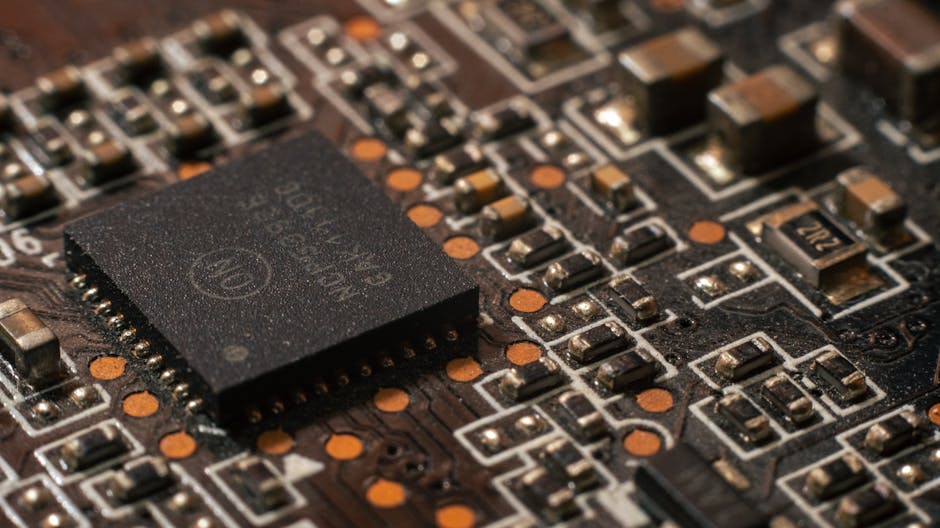
Current market estimates place the cost of HBM3e at roughly $15 to $18 per gigabyte. For an accelerator featuring 192GB of HBM3e, the memory cost alone exceeds $3,000. When factoring in the yields of the "Known Good Die" (KGD) required for stacking, the complexity of Through-Silicon Vias (TSVs), and the specialized testing required for 8-high or 12-high stacks, the cost escalates further. By the time these components are integrated via Chip-on-Wafer-on-Substrate (CoWoS) packaging, the memory subsystem and the interposer dominate the manufacturing expense, dwarfing the cost of the logic silicon.
Why Logic Scaling Failed to Keep Pace
The pivot toward memory-dominated costs is a direct result of the "Inference Gap." Large Language Models (LLMs) are inherently memory-bandwidth bound during the auto-regressive decoding phase. While floating-point operations per second (FLOPS) have increased by orders of magnitude, the ability to move data from memory to the compute units has lagged.
To compensate, hardware architects have been forced to move memory physically closer to the logic. HBM solves the bandwidth problem by using wide interfaces (1024-bit per stack) and short traces, but it introduces extreme manufacturing complexity. Unlike standard DDR5, which is produced in massive, high-yield commodity fabs, HBM requires precise vertical stacking of DRAM dies using micro-bumps and TSVs. The failure of a single die in a 12-layer stack renders the entire stack useless, leading to a yield-adjusted cost that remains stubbornly high even as production ramps.
The Role of Advanced Packaging (CoWoS)
The transition of the BOM toward memory is also driven by the "packaging tax." Frontier AI chips use 2.5D packaging, specifically TSMC’s CoWoS-S. In this process, the logic die and the HBM stacks are placed on a silicon interposer, which provides the high-density routing between them.
The interposer itself has become a significant cost center. As the number of HBM stacks increases from four in the A100 to eight in the H100 and up to twelve in the Blackwell generation the interposer size must grow. We are now approaching "reticle limit" issues where the interposer is so large that it is difficult to manufacture without defects. This necessity for sophisticated integration means that even if logic costs were to drop through architectural improvements, the fixed cost of marrying that logic to HBM remains a barrier to entry.
Architectural Implications: The Search for Efficiency
This new economic reality is forcing a shift in how AI hardware is designed. When memory accounts for 60-70% of the cost, engineers are incentivized to maximize "Memory Utilization Efficiency" rather than just peak FLOPS.
- Quantization and Sparsity: There is a renewed focus on FP8, FP4, and even 1-bit quantization. If memory is the primary cost, reducing the footprint of the model weights is the most direct path to improving the Total Cost of Ownership (TCO).
- Processing-In-Memory (PIM): Companies are experimenting with moving basic arithmetic operations directly into the memory die. By performing computations within the HBM stack, the energy and latency costs of moving data across the interposer are mitigated.
- Alternative Interconnects (CXL): The industry is looking toward Compute Express Link (CXL) to allow for "memory pooling." This would allow GPUs to access a large, shared pool of cheaper (though higher latency) DDR5 memory, reducing the reliance on ultra-expensive HBM for every gigabyte of capacity.
The Competitive Landscape
The shift in hardware economics has concentrated power among a few key players. SK Hynix, Micron, and Samsung have become the "kingmakers" of the AI era. Because HBM supply is the limiting factor for GPU shipments, the pricing power has shifted from the logic designers to the memory foundries.
Furthermore, this cost structure raises the barrier for AI startups. Designing a competitive logic die is challenging, but securing a supply of HBM3e and the packaging capacity to integrate it is a multi-billion dollar logistical hurdle. This is why we see "hyperscalers" like AWS, Google, and Microsoft designing their own chips (Trainium, TPU, Maia). They aren't necessarily trying to beat NVIDIA on logic; they are trying to optimize the memory-to-logic cost ratio for their specific internal workloads.
Conclusion: A New Era for Hardware Economics
The era of "cheap" memory is over for the high-performance computing sector. As long as AI models continue to scale in parameter count, the demand for high-bandwidth data movement will continue to outpace the gains in logic efficiency. With memory now commanding the majority of the bill of materials, the future of AI hardware innovation will not be defined by who can pack the most transistors into a die, but by who can most efficiently manage the thermal, physical, and financial costs of the memory subsystem.
The "Hardware Lottery" has been replaced by a "Memory Monopoly," where the economics of the stack define the limits of the intelligence we can build.
Verified Sources
- TrendForce Semiconductor Research: Reports on HBM3e pricing trends and the impact of TSVs on DRAM manufacturing yields (2023-2024 Market Analysis).
- Yole Group / Yole Développement: "Status of the Memory Industry" and "Advanced Packaging Market Monitor," detailing the transition of BOM costs in data center GPUs.
- SemiAnalysis: Technical breakdowns of NVIDIA Blackwell (B200) and H100 CoWoS packaging costs and HBM utilization rates.
- TSMC Investor Relations: Public disclosures regarding the scaling of CoWoS capacity and the increasing complexity of silicon interposers for AI accelerators.
Author: Stacklyn Labs